
Hematite for Drilling Fluids – High-Density Weighting Material for Superior Well Control
In modern oil and gas drilling operations, maintaining accurate well pressure is essential for safe, efficient, and successful performance. Hematite for drilling fluids is widely recognized as a premium high-density weighting material designed for demanding mud systems, particularly in deep, high-pressure, and high-temperature environments.
With its superior specific gravity, excellent thermal stability, and consistent performance, hematite has become a preferred alternative when conventional weighting agents reach operational limitations.
At Petropath, hematite is manufactured in-house under strict quality control, ensuring reliable results, uniform particle sizing, and dependable performance for drilling programs worldwide
Hematite for drilling fluids is a naturally occurring iron oxide mineral with the chemical formula Fe₂O₃. In drilling applications, hematite functions as a high density weighting material that increases mud weight while maintaining fluid stability and chemical compatibility.
Unlike traditional weighting materials, hematite allows operators to achieve higher mud densities using lower solids volume. This makes it especially valuable in wells with limited annular space or extreme downhole pressure requirements.
As a specialized hematite weighting agent, it plays a critical role in modern drilling fluid engineering.
Why Hematite for Drilling Fluids Is Used in Critical Wells
Drilling operations today are more complex than ever, driving demand for advanced weighting additives. Hematite for drilling fluids is widely used in critical well conditions due to several technical advantages:
High specific gravity enabling greater mud weights with reduced solids concentration
Excellent stability in HPHT drilling environments
Low chemical reactivity in water-based, oil-based, and synthetic mud systems
Improved suspension behavior with engineered particle size distribution
Enhanced pressure control while maintaining predictable rheology
These properties make hematite an ideal solution for challenging well control scenarios.
In-House Manufactured Hematite by Petropath
Petropath maintains full control over the hematite production process rather than relying on third-party resellers. This ensures consistent performance and strict quality assurance across every batch.
Our manufacturing process includes:
Selection of high-purity raw materials
Precision grinding and micronizing
Controlled particle size distribution
Batch-wise testing and validation
This approach ensures hematite for drilling fluids delivers stable density, reduced sag potential, and dependable performance across multiple drilling intervals.
Applications of Hematite for Drilling Fluids
Petropath hematite is engineered for a wide range of drilling and completion operations, including:
High-density drilling mud systems
HPHT well environments
Deepwater and offshore drilling programs
Pressure management and well control scenarios
Specialized completion and workover fluids
The material is compatible with WBM, OBM, and SBM systems, making it a versatile additive for global oilfield applications.
Hematite vs Barite – Performance Comparison
When evaluating weighting materials, hematite consistently outperforms barite in extreme drilling environments.
| Parameter | Hematite | Barite |
|---|---|---|
| Specific Gravity | 5.0 – 5.3 | ~4.2 |
| Mud Weight Capability | High | Moderate |
| HPHT Performance | Excellent | Limited |
| Volume Requirement | Lower | Higher |
For wells facing pressure, temperature, or space constraints, hematite for drilling fluids provides a more efficient and technically advanced solution.
Technical Specifications – Petropath Hematite
Typical Properties
Chemical Formula: Fe₂O₃
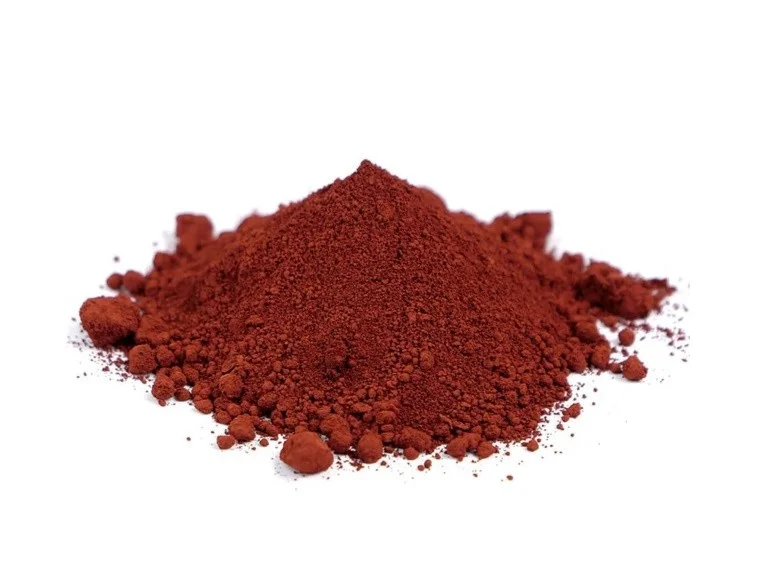
Appearance: Reddish-brown powder
Specific Gravity: 5.0 – 5.3
Bulk Density: 2.4 – 2.6 g/cm³
Particle Size: API or customized specification
Solubility in Water: Insoluble
pH (Suspension): Neutral
Thermal Stability: Excellent for HPHT applications
Custom particle size distributions are available to meet specific drilling fluid designs and operational requirements.
Quality Assurance and Testing
Every batch of Petropath hematite undergoes rigorous testing to ensure oilfield-grade reliability and performance consistency. Quality control includes:
Specific gravity and density verification
Particle size distribution analysis
Contamination monitoring
Compliance with API-based performance standards
This commitment reduces operational risk, improves drilling efficiency, and ensures predictable mud behavior in the field.
Hematite has a significantly higher specific gravity (typically 5.0 to 5.3) compared to barite, which sits around 4.2. Because hematite is denser, engineers can achieve the exact same mud weight while using a much smaller volume of solid particles. This translates to less total solids in the mud, leading to improved rheology, faster rates of penetration, and ultimately lower overall drilling costs.
Hematite is incredibly versatile. It can be successfully blended with all types of drilling fluids, including freshwater, seawater, and oil-based muds. It is most frequently favored in high-density oil-base muds and as a heavy “kill fluid” used to control pressure during well emergencies.
Because hematite adds density without requiring a massive volume of solids, it helps prevent the fluid from becoming too thick. It generally maintains the ideal Yield Point to Plastic Viscosity (YP/PV) ratio, ensuring that the drilling mud has the necessary gel strength to suspend drilled rock cuttings and transport them out of the borehole.
One of the primary challenges with hematite is “sag,” where the heavy particles tend to settle at the bottom of the wellbore, especially under high pressure and high-temperature conditions. To prevent this, operators often utilize anti-sag additives (like perlite) or blend hematite with materials like micronized ilmenite to keep the solid particles evenly suspended.
Yes, high-quality, oilfield-grade hematite conforms to strict industry regulations such as API 13A (the standard for drilling fluid materials). To ensure it meets these requirements, the powdered ore is carefully ground to the correct particle size, washed of impurities, and tested for abrasiveness.
Why Choose Petropath as Your Hematite Supplier?
Selecting the right supplier is critical to drilling success. Petropath provides:
✔ In-house manufactured hematite
✔ Consistent oilfield-grade quality
✔ Proven performance in HPHT wells
✔ Reliable global supply and batch uniformity
✔ Technical expertise from drilling fluid specialists
With Petropath, operators gain performance stability, confidence, and long-term operational value.
Conclusion
Hematite for drilling fluids is more than a weighting additive—it is a vital component for well control in modern drilling operations. With its high density, thermal stability, and superior solids performance, hematite enables safer and more efficient drilling in extreme well environments.
Petropath’s in-house manufactured hematite delivers the consistency, reliability, and technical performance required for today’s most demanding drilling challenges. For operators seeking a trusted hematite weighting agent, Petropath stands as a dependable global partner.