
Horizontal Directional Drilling Services for Sustainable Infrastructure
What Is Horizontal Directional Drilling?
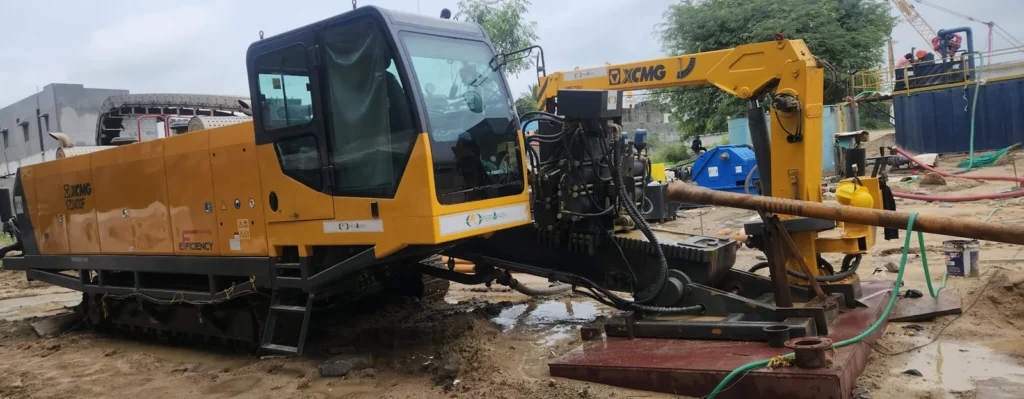
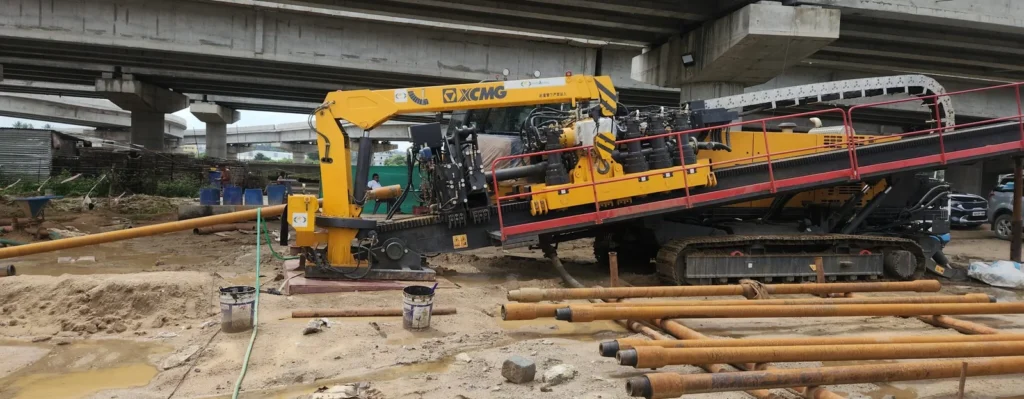
How HDD Services Work
Applications of HDD Services
HDD Services are widely used across multiple industries, including:
Underground pipeline installation for oil, gas, and water transmission
River, lake, and wetland crossings
Highway and railway underpasses
Urban utility corridors with limited access
Fiber optic and power cable installations
Environmentally sensitive and protected areas
This versatility makes HDD trenchless technology essential for future-ready infrastructure projects.
Environmental Advantages of HDD Trenchless Technology
Sustainability is a major advantage of HDD Services. Unlike open trenching, HDD significantly reduces land disturbance and preserves natural ecosystems.
Key Environmental Benefits:
Minimal surface excavation
Reduced impact on waterways and soil structure
Lower carbon footprint
Controlled drilling fluid management
Protection of flora and fauna
Even in rare cases of drilling fluid returns, experienced HDD professionals deploy immediate containment and remediation strategies, ensuring compliance with environmental standards.
7 Powerful Benefits of HDD Services
Cost-Effective Construction – Reduced excavation and restoration costs
Faster Project Completion – Minimal surface disruption speeds up delivery
High Precision & Accuracy – Advanced steering ensures exact alignment
Long-Term Durability – Welded, coated pipelines enhance lifespan
Environmental Protection – Ideal for sustainable HDD solutions
Urban-Friendly Method – Perfect for congested city environments
Enhanced Safety – Lower risks for workers and surrounding communities
These benefits position HDD Services as the most efficient trenchless drilling solution available today.
Why Choose Professional HDD Services?
Vision & Mission
Vision:
To set global benchmarks in safety, quality, and environmental responsibility through innovative HDD Services.
Mission:
To deliver sustainable HDD solutions that create long-term value while supporting infrastructure growth and environmental preservation.
- Pilot Hole: A steerable drill rig pushes a hollow drill string into the ground from the surface, guided by internal sensors to avoid obstacles.
- Reaming: Once the drill head reaches the exit point, it is removed and replaced by a reamer (a widening tool). This is pulled back to expand the initial hole to fit the utility pipe.
- Pull-back: The actual service pipe is then attached to the reamer and pulled into the enlarged, pre-drilled tunnel.
The main benefit of HDD is minimal surface disruption . Traditional excavation (cut-and-cover) requires digging long trenches, which destroys roads, landscaping, and ecosystems. HDD eliminates this by drilling far underneath these obstacles, offering a safer, more cost-effective solution for environments that cannot be disturbed.
The average length of a typical utility drill ranges from 600 to 1,000 feet, though heavy-duty equipment can reach up to 9,800 feet (3,000 meters) depending on soil conditions. The depth depends on the project, but generally, drills are placed deep enough to clear the utility or obstacle safely.
- Major highways and heavily trafficked roadways
- Railroad tracks
- Rivers, lakes, and streams
- Existing underground infrastructure (e.g., gas lines, electric conduits)
- Environmentally sensitive zone
Before drilling begins, crews utilize a One Call system to mark public utilities and perform ground-penetrating scans to map the area. During the drill, the operator relies on a subsurface tracking system (like an electromagnetic guidance beacon) to monitor the exact location, depth, and angle of the drill head, allowing them to steer around unexpected structures.
Commitment to Sustainable HDD Solutions
Conclusion: The Future of Trenchless Infrastructure
We provide worldwide delivery, custom configurations, and technical support tailored to your operational needs.