
Core Lab Services for CBM Reservoir Analysis: 9 Powerful Ways to Maximize Coal Bed Methane Potential
Introduction
Core Lab Services for CBM Reservoir Analysis are the foundation of successful Coal Bed Methane (CBM) exploration and production. As the global demand for cleaner energy sources continues to grow, CBM has become an increasingly valuable unconventional gas resource. However, unlocking its full potential requires a detailed understanding of coal seam characteristics, gas storage capacity, reservoir behavior, and production feasibility.
At Petropath Fluids Limited, we provide industry-leading Core Lab Services for CBM Reservoir Analysis that help energy companies, exploration firms, and research organizations make confident technical and commercial decisions. Our dedicated CBM laboratory in Durgapur, West Bengal, is among the few specialized facilities in India offering comprehensive coal core testing under internationally recognized quality standards.
Using advanced analytical techniques, modern instrumentation, and experienced geoscientists, our laboratory delivers reliable reservoir data that supports exploration, reserve estimation, production forecasting, and long-term field development.
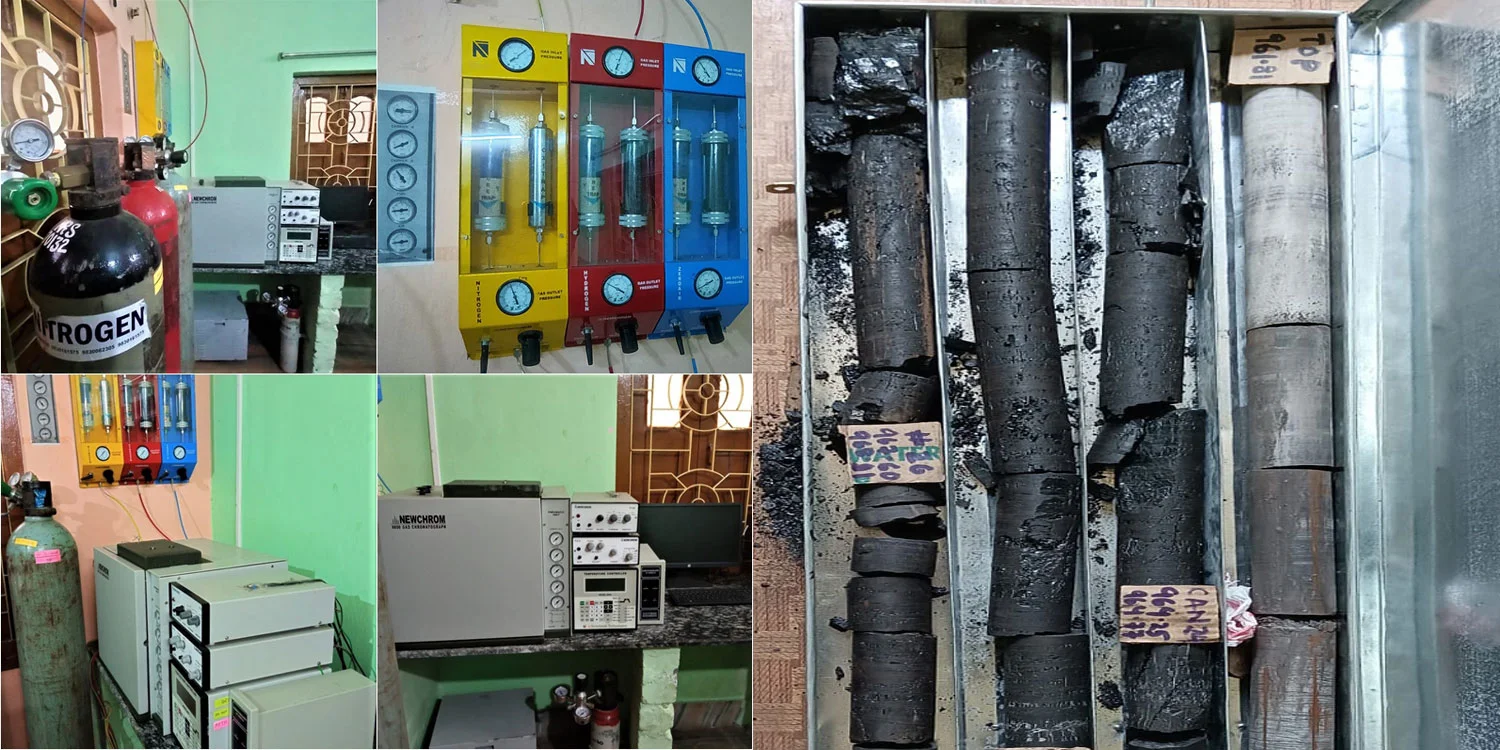
Why Core Lab Services for CBM Reservoir Analysis Matter
Coal Bed Methane reservoirs differ significantly from conventional gas reservoirs. Methane is stored within the microscopic pores of coal and released only under specific pressure conditions. Accurate laboratory evaluation is therefore essential before planning drilling or production operations.
Professional Core Lab Services for CBM Reservoir Analysis enable operators to:
- Determine reservoir gas content
- Evaluate coal quality and maturity
- Estimate gas-in-place reserves
- Understand adsorption characteristics
- Improve reservoir simulation accuracy
- Reduce exploration uncertainty
- Increase production efficiency
Without reliable laboratory data, CBM development projects may face unnecessary risks, increased costs, and lower recovery rates.
Comprehensive CBM Core Laboratory Services
Petropath offers complete CBM core laboratory services designed to evaluate every important aspect of coal seam reservoirs.
1. Field Desorption Studies
Field desorption studies begin immediately after coal cores are recovered. These tests measure the volume of methane released from freshly extracted coal samples, providing an accurate estimate of original gas content.
This information forms the basis for reserve calculations and early reservoir evaluation.
2. Gas Composition Analysis
Gas composition analysis identifies the percentage of methane, carbon dioxide, nitrogen, and other gases present within the coal seam.
This analysis helps operators:
- Evaluate gas quality
- Design processing facilities
- Improve production planning
- Meet commercial gas specifications
Reliable CBM gas content analysis also supports environmental and operational safety.
3. Total Organic Carbon (TOC) Analysis
TOC analysis determines the organic richness of coal formations. Higher organic content generally indicates greater hydrocarbon generation potential and improved methane storage capability.
TOC data is widely used during reservoir characterization and exploration planning.
4. Proximate Analysis
Proximate analysis measures four important coal properties:
- Moisture
- Ash content
- Volatile matter
- Fixed carbon
These parameters help engineers classify coal rank and understand reservoir performance under production conditions.
5. Ultimate Analysis
Ultimate analysis determines the elemental composition of coal by measuring:
- Carbon
- Hydrogen
- Oxygen
- Nitrogen
- Sulfur
This information supports advanced reservoir modeling, combustion studies, and CBM feasibility assessments.
Advanced Coal Bed Methane Reservoir Analysis
Petropath goes beyond standard laboratory testing by offering advanced analytical services that improve reservoir understanding and production forecasting.
Borehole Site Canister Desorption
Canister desorption is one of the most important procedures in Coal Bed Methane reservoir analysis. Coal samples are sealed immediately after retrieval to preserve in-situ gas content.
The test accurately determines:
- Lost gas
- Measured gas
- Residual gas
- Total gas content
These values are essential for reserve estimation.
CBM Gas Content Analysis
Precise CBM gas content analysis measures the total methane volume stored within coal seams.
This data assists in:
- Reserve estimation
- Economic evaluation
- Production forecasting
- Well design optimization
Accurate gas content measurements significantly improve investment decisions.
Desorbed Gas Composition Analysis
As methane desorbs from coal over time, its composition may change.
Petropath continuously monitors gas composition throughout the desorption process, helping operators better understand reservoir behavior during production.
Adsorption Isotherm Studies for CBM
Among the most valuable laboratory tests are Adsorption isotherm studies for CBM.
These studies determine:
- Maximum methane storage capacity
- Reservoir pressure relationships
- Gas adsorption behavior
- Gas desorption efficiency
Adsorption isotherms are fundamental for predicting recoverable reserves and optimizing production strategies.
Benefits of Choosing Petropath
Petropath Fluids Limited has earned a reputation for delivering dependable laboratory services for unconventional reservoirs.
Our strengths include:
Dedicated CBM Laboratory
We operate one of India’s few laboratories exclusively focused on CBM reservoir testing and analysis.
Comprehensive Testing Solutions
From field desorption studies to advanced adsorption testing, we provide complete laboratory support throughout the CBM project lifecycle.
Modern Analytical Equipment
Our laboratory uses advanced instruments that ensure precise, repeatable, and reliable analytical results.
Experienced Technical Team
Our geologists, reservoir engineers, and laboratory specialists possess extensive industry knowledge and practical expertise.
International Quality Standards
Every test follows globally recognized laboratory procedures with strict quality assurance and control measures.
Actionable Reservoir Insights
Our reports provide meaningful technical interpretations that support informed exploration, drilling, and production decisions.
Applications of Core Lab Services for CBM Reservoir Analysis
Petropath’s laboratory services support every stage of CBM development.
Applications include:
- CBM exploration programs
- Reservoir characterization
- Gas-in-place estimation
- Resource assessment
- Reservoir simulation
- Production optimization
- Well completion planning
- Development strategy preparation
- Investment evaluation
- Academic and research studies
By combining laboratory precision with geological expertise, we help operators reduce uncertainty while maximizing methane recovery.
Why Accurate Laboratory Data Improves CBM Success
Coal reservoirs are naturally heterogeneous. Gas storage capacity, permeability, coal rank, and adsorption behavior can vary significantly even within the same basin.
Accurate Core Lab Services for CBM Reservoir Analysis provide dependable geological data that improves:
- Reserve calculations
- Economic forecasting
- Production planning
- Reservoir management
- Risk assessment
- Long-term field performance
Reliable laboratory results ultimately translate into more efficient operations and better commercial outcomes.
Why Petropath is a Trusted CBM Laboratory Partner
Petropath Fluids Limited combines scientific expertise, advanced laboratory technology, and years of industry experience to deliver dependable CBM analytical services.
Our integrated testing solutions help clients:
- Improve reservoir understanding
- Reduce exploration risks
- Optimize production performance
- Increase investment confidence
- Support sustainable energy development
Whether you are evaluating a new CBM block or optimizing an existing field, our laboratory provides the technical insights needed for smarter decision-making.
A “core lab” (or core facility) is a centralized, shared laboratory that provides researchers and clinicians with access to highly specialized equipment, advanced technologies, and expert technical services.
- Railways: Central Organisation for Railway Electrification.
- Engineering/Computing: Central Processing Unit (CPU) Core or Core Dump (a diagnostic file created when a program crashes).
- Non-Profit: Community Organized Relief Effort.
- Government/Policy: Cofinancing for Renewable Energy and Energy Efficiency.
The four main types of coal, ranked in order from lowest to highest carbon and heat content, are lignite, subbituminous, bituminous, and anthracite. Their classification depends on the geological heat and pressure they have been subjected to over millions of years.
What is Coalbed Methane Extraction? Coalbeds are a source of unconventional gas. CBM is naturally created during the geologic process of converting plant material to coal (coalification). To extract the methane, CBM operators drill wells into coal seams and pump out ground water (produced water or CBM wastewater).
Conclusion
Core Lab Services for CBM Reservoir Analysis are essential for accurately evaluating coal seam reservoirs and maximizing Coal Bed Methane production. From field desorption studies and CBM gas content analysis to Adsorption isotherm studies for CBM, every laboratory test contributes valuable information that supports successful reservoir development.
At Petropath Fluids Limited, we are committed to providing precise, reliable, and internationally compliant laboratory services that empower energy companies to make confident exploration and production decisions. Our specialized CBM laboratory combines advanced technology with technical expertise to deliver actionable reservoir insights that improve efficiency and profitability.
If you are looking for dependable Core Lab Services for CBM Reservoir Analysis in India, Petropath Fluids Limited is your trusted partner for accurate testing, expert interpretation, and long-term CBM project success.
We provide worldwide delivery, custom configurations, and technical support tailored to your operational needs.