
Drilling Fluid Mixing Hopper: Advanced Mud Mixing for Efficient Drilling
Introduction
Efficient drilling fluid preparation is essential for maintaining wellbore stability, controlling formation pressure, transporting drilled cuttings, and supporting safe drilling operations. A Drilling Fluid Mixing Hopper plays a critical role in this process by enabling drilling additives to be rapidly and uniformly incorporated into the fluid system.
In modern oil and gas operations, drilling fluids may contain bentonite, barite, polymers, viscosifiers, weighting agents, and other specialized additives. Poor dispersion can result in lumps, inconsistent fluid properties, increased chemical consumption, and unnecessary downtime. A properly designed Drilling Fluid Mixing Hopper helps overcome these challenges by creating controlled turbulence and high-shear mixing conditions.
At Petropath Fluids Ltd., advanced hopper solutions are engineered to provide reliable additive dispersion, efficient mud preparation, and compatibility with different drilling fluid systems.
What Is a Drilling Fluid Mixing Hopper?
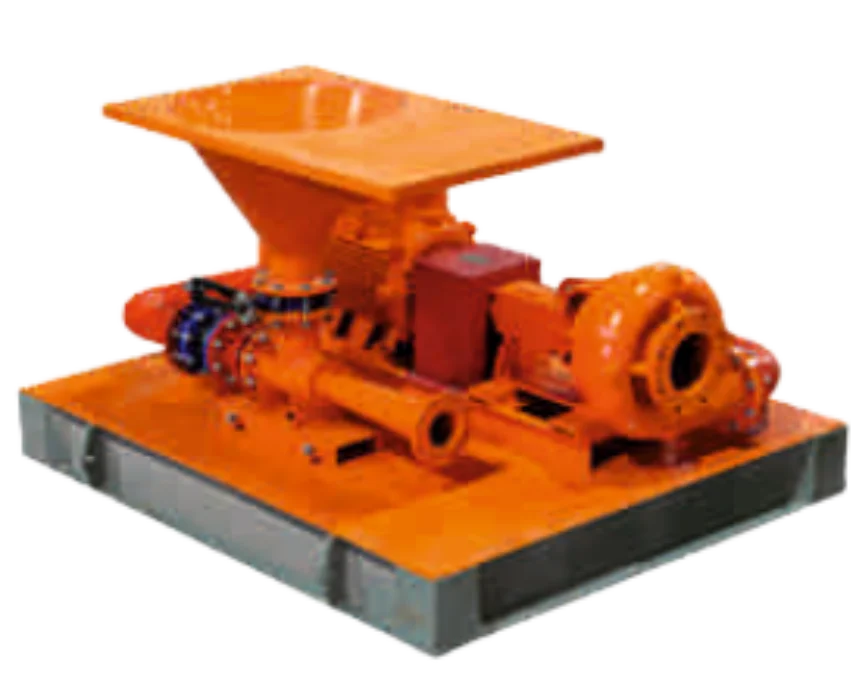
A Drilling Fluid Mixing Hopper is specialized oilfield mixing equipment used to introduce dry or liquid additives into drilling fluids. It is generally integrated with mud tanks, centrifugal pumps, and other components of a drilling fluid mixing system.
The hopper uses fluid flow and pressure to create a suction effect that draws additives into the circulating drilling fluid. Once introduced, the additives are dispersed throughout the fluid, helping operators achieve the required density, viscosity, filtration characteristics, and other mud properties.
This makes the hopper an important component for drilling contractors looking to improve mixing consistency while reducing preparation time.
How Does a Drilling Fluid Mixing Hopper Work?
The operating principle is based primarily on the Venturi effect. Drilling fluid is pumped through a specially designed throat at high velocity. As the fluid accelerates, pressure decreases and creates suction.
This suction draws dry or liquid additives into the flowing fluid stream. The resulting turbulence and shear forces help break down particles and distribute them throughout the drilling fluid.
A typical mixing sequence involves:
Drilling fluid is circulated through the hopper using a centrifugal pump.
High-velocity flow creates a pressure differential inside the Venturi section.
Dry or liquid additives are drawn into the fluid stream.
Turbulence promotes rapid dispersion and mixing.
The treated drilling fluid returns to the mud tank for continued circulation.
This process provides more consistent mixing than simply adding powdered chemicals directly into a tank.
Key Features of Modern Mud Mixing Hopper Systems
A high-quality Drilling Fluid Mixing Hopper should be designed for demanding oilfield environments. Important features can include:
Venturi-based high-shear mixing
Efficient dispersion of barite, bentonite, and polymers
Robust carbon steel or stainless steel construction
Adjustable flow-control arrangements
Compatibility with mud tanks and centrifugal pumps
Easy-access components for inspection and maintenance
Flanged or hammer-union connections
Skid-mounted or tank-top installation options
These features allow the equipment to operate reliably across different drilling applications and fluid formulations.
Typical Technical Specifications
Specifications can be customized according to the drilling fluid system, pump capacity, and operational requirements.
| Parameter | Typical Specification |
|---|---|
| Type | Venturi Mixing Hopper |
| Capacity | 600–1500 L/min |
| Inlet Size | 2” or 3” |
| Outlet Size | 4” or 6” |
| Working Pressure | 0.2–0.6 MPa |
| Construction | Carbon Steel / Stainless Steel |
| Connection | Flanged / Hammer Union |
| Mounting | Skid-mounted / Tank-top |
Custom configurations can be developed for specific mud plant, land rig, offshore, and centralized fluid-mixing requirements.
Benefits of Using a Drilling Fluid Mixing Hopper
A properly selected Drilling Fluid Mixing Hopper can provide several operational benefits.
Faster Mud Preparation
High-velocity mixing improves additive dispersion and can reduce the time required to prepare drilling fluids. Faster preparation can help minimize delays during drilling operations.
Consistent Fluid Properties
Uniform additive distribution helps maintain consistent mud density, viscosity, and other critical properties. Consistency is particularly important when drilling conditions change rapidly.
Better Additive Utilization
Controlled additive introduction can reduce material loss and improve chemical utilization. This may help drilling contractors manage operational costs more effectively.
Easy System Integration
Modern hoppers can be incorporated into existing Drilling Fluid Mixing Equipment arrangements, including mud tanks, pumps, and circulation systems.
Reduced Maintenance
Simple mechanical construction, durable materials, and accessible components can help simplify routine inspection and maintenance.
Applications of Oilfield Mixing Equipment
A Drilling Fluid Mixing Hopper can be used in a wide range of drilling and mud-processing applications, including:
Onshore drilling rigs
Offshore drilling operations
Water-based mud preparation
Oil-based mud systems
High-density drilling fluid preparation
Centralized mud plants
Exploration and production drilling
Drilling fluid treatment facilities
Because the hopper can be configured for different flow rates and materials, it can support various drilling fluid formulations and operational environments.
Safety and Maintenance Considerations
Proper operation and maintenance are important for maximizing equipment life. Operators should verify that the system is working within the recommended pressure and flow parameters before introducing additives.
Routine maintenance should include inspection of the Venturi throat, valves, connections, and internal passages. Operators should also avoid excessive dry-powder loading because overloading can affect additive flow and potentially cause blockages.
Cleaning the Mud Mixing Hopper after use can help prevent material buildup and maintain consistent performance during subsequent mixing cycles.
Customization Options
Different drilling projects have different fluid-handling requirements. Petropath Fluids Ltd. can provide customized configurations for demanding applications.
Possible options include:
Stainless steel 316 construction for corrosive environments
Integrated flow meters
Customized inlet and outlet sizes
Skid-mounted configurations
Trailer-mounted solutions
Flow-control valves
PLC-based automation
Integration with existing mud systems
Such customization enables the equipment to match the capacity, layout, and operational requirements of individual drilling sites.
Fluid is pumped through a constricted nozzle inside the hopper, creating a pressure drop that generates suction (the Venturi effect). This vacuum pulls dry powders (like bentonite or barite) from the funnel into the fluid stream. The high-velocity flow produces strong shear mixing, guaranteeing complete homogenization before the fluid enters the mud tank
- Viscosifiers: Bentonite or polymers to help suspend and carry cuttings to the surface.
- Weighting Agents: Barite or calcium carbonate to increase fluid density and prevent blowouts.
- Fluid Loss Additives: Lignite or sulfonated asphalt to control water loss into the formation.
Blockages usually happen if the butterfly valve is opened too fast or if additives are dumped into the hopper faster than the jet can handle. Additionally, if the piping section right after the nozzle is too short, the water will hit an elbow, splash backward, and cause the hopper to block. Always add materials gradually according to the mud engineer’s instructions.
Because drilling fluids rely on chemical additives (like caustic soda), operators should wear personal protective equipment (PPE) including rubber aprons, rubber gloves, work shoes, and goggles or face shields. Always ensure that an eyewash station is stocked and readily accessible in the mixing area.
Drilling fluid additives hydrate and mix best when the water has a pH level between 8 and 9. Municipal water usually falls in this range, but if you are using water from a pond or well, it is often more acidic. Operators often add soda ash to raise the pH, which allows them to use less overall product and prevents the bentonite from clumping
Why Choose Petropath Fluids Ltd.?
Selecting the right Drilling Fluid Mixing Hopper supplier is important for maintaining reliable drilling fluid preparation. Petropath Fluids Ltd. focuses on engineering oilfield mixing solutions designed for performance, durability, and operational flexibility.
With customizable designs, robust construction, technical expertise, and support for different drilling fluid applications, Petropath provides solutions suitable for drilling contractors, mud plants, and oilfield service companies.
The combination of efficient mixing technology and practical system integration helps customers improve fluid preparation while supporting dependable drilling operations.
Conclusion
A Drilling Fluid Mixing Hopper is an important component of an efficient drilling fluid mixing system. By using Venturi-based suction and high-velocity fluid flow, it enables rapid incorporation and dispersion of drilling additives such as barite, bentonite, and polymers.
For modern drilling operations, efficient additive mixing can contribute to consistent mud properties, faster preparation, improved chemical utilization, and reduced operational downtime. With customizable configurations and durable construction, Petropath Fluids Ltd. provides advanced mixing solutions designed to meet the demands of modern oilfield operations.