
Drillzyme™: Advanced Enzyme-Based Solution for Stuck Pipe in Oil & Gas Drilling
Stuck pipe is one of the most costly drilling challenges faced by oil and gas operators. When the drill string, drill collars, or bottom-hole assembly loses mobility, drilling operations can experience significant non-productive time (NPT), equipment risks, fishing operations, and increased project costs.
Drillzyme™ is an advanced enzyme-based chemical developed to help prevent and release stuck pipe conditions in water-based drilling fluid systems. Its targeted enzymatic action helps address mud-cake components associated with differential sticking while supporting improved drill-string mobility.
For demanding drilling environments, Drillzyme™ provides a practical chemical approach to stuck pipe prevention and remediation, particularly where maintaining wellbore stability and drilling efficiency is essential.
Why Does Stuck Pipe Occur During Drilling?
Stuck pipe occurs when the drill string can no longer move freely because of mechanical restrictions or pressure-related forces. Differential sticking is a common concern when the drill pipe becomes pressed against a permeable formation through an overbalanced pressure differential.
Several drilling-fluid and wellbore conditions can increase the likelihood of sticking, including:
Excessive filter-cake thickness
Poor mud-cake quality
High concentrations of drilled solids
Insufficient lubricity in water-based mud
Differential pressure across permeable formations
Cuttings accumulation and poor hole cleaning
Deviated and extended-reach well profiles
If the problem is not addressed quickly, a relatively small sticking event can develop into a major operational challenge.
This is where Drillzyme™ can become part of a structured stuck-pipe prevention and remediation program.
What Is Drillzyme™?
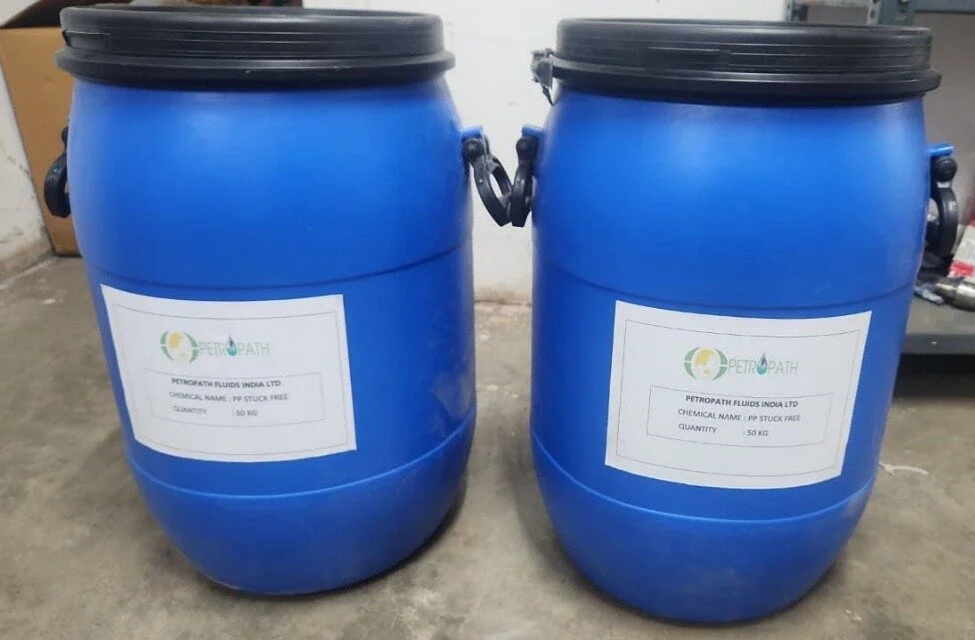
Drillzyme™ is an enzyme-based stuck-free chemical formulated for use in water-based drilling fluid environments. It is designed to act on organic and polymeric components associated with the mud cake at the sticking zone.
Rather than relying solely on conventional mechanical approaches, Drillzyme™ uses controlled enzymatic activity to help break down targeted components of the mud cake. This can help weaken adhesion between the drill string and formation and support the recovery of drill-string mobility.
The product can therefore serve as a specialized differential sticking chemical within drilling-fluid treatment programs.
How Does Drillzyme™ Work?
The effectiveness of an enzyme-based treatment depends on its ability to reach the affected zone and interact with the components contributing to sticking.
A typical mechanism involves several stages:
1. Penetration of the Mud Cake
The treatment reaches the mud cake surrounding the sticking zone, allowing the active chemistry to interact with relevant organic and polymeric materials.
2. Enzymatic Breakdown
The enzymes work on targeted components that contribute to the structure and adhesion of the mud cake.
3. Reduction of Adhesion
As the targeted materials are degraded, the treatment can help reduce the bonding forces contributing to differential sticking.
4. Improved Drill-String Mobility
With reduced adhesion at the affected zone, operators can work toward restoring movement and recovering the stuck assembly.
5. Integration With Existing Mud Programs
As a specialized drilling fluid additive, Drillzyme™ can be incorporated into appropriate water-based mud treatment strategies without requiring a complete redesign of the drilling-fluid system.
Key Benefits of Drillzyme™
Using Drillzyme™ as part of an appropriate drilling-fluid management program can provide several operational advantages:
Helps address differential sticking conditions
Supports stuck pipe prevention and remediation
Suitable for water-based drilling fluid systems
Targets organic and polymeric mud-cake components
Helps restore drill-string mobility
Can contribute to reduced non-productive time
Supports efficient drilling-fluid management
Suitable for demanding drilling environments
Can be used in deviated and extended-reach wells
Provides an alternative chemical approach to conventional treatments
The exact treatment approach should always be determined according to well conditions, drilling-fluid properties, formation characteristics, and technical recommendations.
Applications of Drillzyme™ in Oil & Gas Drilling
Drillzyme™ can be considered for applications where differential sticking and mud-cake-related adhesion are significant operational concerns.
Potential applications include:
Stuck pipe remediation in water-based mud systems
Differential sticking control
Wells with challenging filter-cake conditions
High-pressure drilling environments
Deviated well sections
Extended-reach drilling operations
Preventive treatment in high-risk sticking zones
Drilling-fluid programs requiring specialized mud-cake treatment
Its application should be supported by appropriate technical evaluation to determine the correct treatment concentration and operating procedure for the specific well.
It works via a precise enzymatic reaction. When introduced near the stuck zone, its enzymes target and break down the organic polymers that bind the filter cake together. This degrades the filter cake, relieves differential pressure, and frees the stuck pipe without damaging the rock formation.
Yes. Unlike traditional acid treatments, which can be highly corrosive and damage the surrounding rock or wellbore tubulars, Drillzyme™ is highly selective. It attacks only the polymers in the drilling mud cake, ensuring the geological formation remains undamaged and production flow remains unhindered
Drillzyme™ is specially formulated for water-based drilling mud environments. It is commonly applied in reservoir drill-in fluids (RDFs) and completion fluids where polymer degradation is required to clean up the wellbore.
- Stuck pipe prevention: Rapidly relieves differential pressure in problem zones.
- Formation preservation: Prevents skin damage and restores natural permeability.
- Cost reduction: Avoids expensive fishing operations and non-productive downtime (NPT)
For specific chemical parameters, Material Safety Data Sheets (MSDS), or bulk pricing, you can directly consult specialty manufacturers like Petropath.
Why Choose Petropath Fluids for Drilling Fluid Solutions?
Petropath Fluids focuses on delivering specialty drilling-fluid chemicals supported by technical expertise and application-oriented solutions.
For stuck pipe challenges, simply selecting a chemical is not enough. Effective treatment requires understanding the drilling-fluid system, formation characteristics, pressure conditions, mud-cake properties, and operational objectives.
Petropath Fluids can support drilling teams through:
Application guidance for Drillzyme™
Customized treatment recommendations
Drilling-fluid analysis
Mud-system performance optimization
Stuck-pipe prevention strategies
Technical assistance during treatment planning
Reliable supply of specialty drilling-fluid additives
This combination of product technology and technical support helps operators make more informed decisions when managing drilling-fluid-related challenges.
Improve Stuck Pipe Management With Drillzyme™
Stuck pipe can quickly turn into expensive non-productive time if the underlying causes are not addressed effectively. A specialized chemical treatment can form an important part of a broader drilling-fluid and wellbore management strategy.
Drillzyme™ provides an enzyme-based approach for addressing organic and polymeric components associated with mud-cake adhesion in water-based drilling environments. By supporting mud-cake breakdown and drill-string mobility, it can help drilling teams respond more effectively to differential sticking challenges.
For operators looking for an enzyme based stuck free chemical, Drillzyme™ offers a targeted approach designed around the specific challenges of modern drilling operations.
When combined with proper drilling-fluid monitoring, preventive practices, and technical expertise, Drillzyme™ can contribute to more efficient stuck-pipe management and better control of drilling-related downtime.