
🚀 7 Powerful Reasons Dead Weight Filter Press Is Essential for Accurate Fluid Loss Testing
Introduction
Dead Weight Filter Press technology plays a crucial role in modern drilling operations where accuracy, safety, and efficiency are non-negotiable. In oil and gas exploration, even minor inconsistencies in drilling fluid performance can result in wellbore instability, formation damage, and increased non-productive time (NPT). That is why reliable fluid loss measurement is not just important—it is essential.
The Dead Weight Filter Press is specifically designed to provide precise and repeatable fluid loss testing under controlled pressure conditions. Unlike gas-powered alternatives, this system uses calibrated dead weights to apply consistent pressure, ensuring dependable laboratory and field results.
In this blog, we explore how the Dead Weight Filter Press works, its advantages, applications, and why it remains the industry standard for drilling fluid analysis.
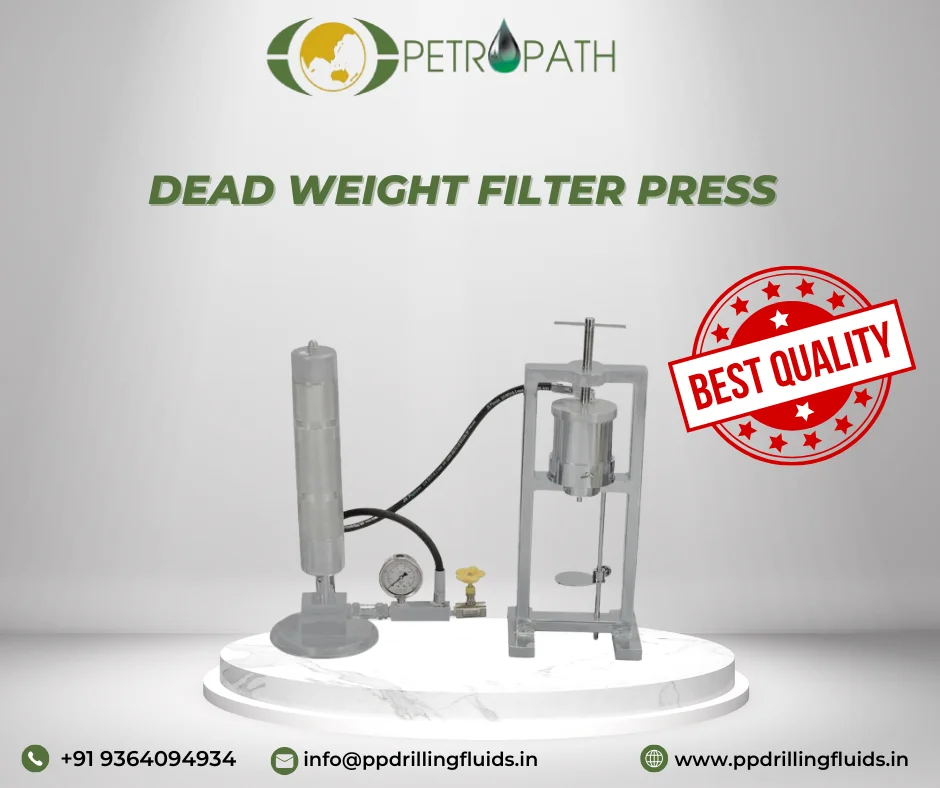
What Is a Dead Weight Filter Press?
A Dead Weight Filter Press is a standardized oilfield laboratory instrument used to measure the filtration characteristics of drilling fluids. It determines how much liquid escapes from a drilling mud sample when subjected to a specific pressure over a fixed period—typically 30 minutes.
This equipment evaluates:
Filtrate volume
Filter cake thickness
Filter cake quality
Overall mud stability
Because it uses calibrated weights instead of gas cartridges, the Dead Weight Filter Press ensures stable and repeatable pressure application, making it one of the most trusted fluid loss testing equipment options in the oilfield industry.
Key Components of a Dead Weight Filter Press
Every Dead Weight Filter Press is engineered for durability and precision. Its main components include:
1️⃣ Mud Cell
Holds the drilling fluid sample securely during testing.
2️⃣ Filter Paper or Medium
Simulates formation permeability conditions.
3️⃣ Calibrated Dead Weights
Apply consistent hydraulic pressure (commonly 100 psi or 500 psi).
4️⃣ Filtrate Collection Tube
Measures the expelled liquid volume accurately.
5️⃣ Support Stand & Clamp
Ensures operational stability and safety.
Together, these components make the Dead Weight Filter Press a dependable mud testing equipment solution for both laboratory and field environments.
How the Dead Weight Filter Press Works
The testing procedure using a Dead Weight Filter Press follows a standardized method:
A drilling fluid sample is poured into the mud cell.
Filter paper is placed at the base to simulate downhole formation conditions.
The assembly is sealed and mounted securely.
Calibrated dead weights are applied to reach the required pressure.
The test runs for 30 minutes.
Filtrate volume and filter cake characteristics are measured.
This controlled process ensures accurate drilling fluid analysis and supports optimized mud system performance.
Why Fluid Loss Testing Is Critical in Drilling Operations
Effective fluid loss testing using a Dead Weight Filter Press helps operators:
Minimize fluid invasion into permeable formations
Prevent differential sticking
Improve wellbore stability
Maintain hydrostatic balance
Reduce non-productive time (NPT)
Control operational costs
Excessive fluid loss can damage formations and compromise drilling efficiency. By using reliable fluid loss testing equipment, engineers can maintain formation integrity and enhance overall drilling performance.
7 Powerful Advantages of Using a Dead Weight Filter Press
1️⃣ High Accuracy
Calibrated weights ensure stable and consistent pressure.
2️⃣ Repeatable Results
Eliminates inconsistencies caused by gas-regulated systems.
3️⃣ Durable Construction
Designed for long-term industrial usage.
4️⃣ No External Gas Required
Improves safety and reduces operational dependency.
5️⃣ Cost-Effective Operation
No recurring gas cartridge expenses.
6️⃣ Portable and Field-Friendly
Ideal for both laboratory and rig-site applications.
7️⃣ Industry Compliance
Meets standard oilfield testing requirements for reliable drilling fluid analysis.
These benefits make the Dead Weight Filter Press an indispensable oilfield laboratory instrument worldwide.
Applications Across the Oil & Gas Industry
The Dead Weight Filter Press is widely used in:
Oil and gas drilling operations
Offshore and onshore rigs
Research & development laboratories
Educational petroleum institutes
Mud engineering service companies
Its versatility ensures it remains one of the most reliable mud testing equipment tools available.
Dead Weight Filter Press vs CO₂ Filter Press
| Feature | Dead Weight Filter Press | CO₂ Filter Press |
|---|---|---|
| Pressure Source | Calibrated weights | Gas cartridges |
| Stability | Highly stable | Can fluctuate |
| Safety | No compressed gas | Requires gas handling |
| Maintenance | Minimal | Cartridge replacement needed |
Role in Professional Drilling Fluid Analysis
In advanced drilling operations, precise drilling fluid analysis determines operational success. The Dead Weight Filter Press allows engineers to:
Evaluate filtration control additives (PAC, CMC, starch)
Optimize mud formulations
Detect abnormal filtration trends
Improve formation protection strategies
This ensures drilling fluids perform efficiently even in high-pressure and complex geological environments.
Conclusion
The Dead Weight Filter Press is more than a laboratory device—it is a critical performance tool in modern drilling operations. By delivering accurate fluid loss testing and dependable drilling fluid analysis, it helps operators minimize risks, protect formations, and optimize drilling efficiency.
Its mechanical pressure system, durability, and compliance with industry standards make the Dead Weight Filter Press one of the most reliable fluid loss testing equipment solutions available today.
For oilfield professionals seeking precision, safety, and operational excellence, investing in a high-quality Dead Weight Filter Press is not just a choice—it is a strategic necessity.