
Lubricity Meter for Drilling Fluid Testing: A Complete Guide for Oilfield Applications
Introduction
Modern oil and gas drilling operations require drilling fluids that can control friction, torque, and mechanical wear throughout the wellbore. Poor lubricity can contribute to increased torque and drag, higher equipment wear, and difficult drilling conditions. This makes accurate Lubricity Meter for Drilling Fluid Testing an important part of drilling fluid evaluation and laboratory quality control.
A lubricity meter helps drilling professionals evaluate how effectively a drilling fluid reduces friction between contacting metal surfaces. By generating measurable friction data, the instrument supports mud engineers in comparing fluid formulations, evaluating lubricants, and making informed adjustments to drilling fluid systems.
Petropath manufactures and supplies laboratory testing equipment for drilling fluid analysis, including instruments designed for lubricity evaluation. These instruments can support testing programs where reliable and repeatable lubricity measurements are required.
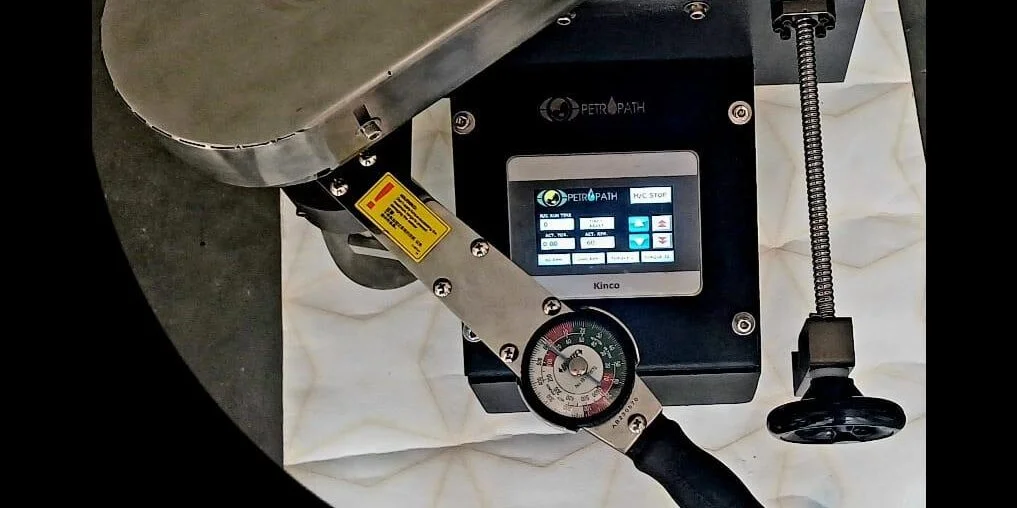
What Is a Lubricity Meter for Drilling Fluid Testing?
A Lubricity Meter for Drilling Fluid Testing is a specialized laboratory instrument used to evaluate the friction-reducing characteristics of drilling fluids. The test generally measures the frictional behavior between a rotating metal surface and a stationary contact surface while the test fluid is present.
The resulting measurements can help engineers understand the lubricating performance of a drilling fluid and compare different mud formulations or lubricant additives.
Depending on the instrument and testing procedure, lubricity testing can support evaluation of:
- Lubricity coefficient
- Friction behavior
- Lubricant performance
- Relative lubricating properties of drilling fluids
- Changes in lubricity after additive treatment
These measurements provide useful laboratory data for drilling fluid optimization before and during field operations.
Why Is Drilling Fluid Lubricity Important?
Drilling fluid lubricity describes the ability of a fluid to reduce friction between surfaces that come into contact during drilling. Drill pipe, casing, formation surfaces, and drilling equipment can experience friction during rotation and movement.
When friction is high, drilling operations may experience increased torque and drag. Excessive friction can also contribute to mechanical wear and make certain drilling conditions more difficult to manage.
A properly evaluated drilling fluid can help engineers identify whether additional lubrication or formulation changes may be required. This is particularly relevant for directional and extended-reach drilling, where friction management can become increasingly important.
Understanding the Lubricity Coefficient
The lubricity coefficient is a numerical representation of friction measured during a lubricity test. It allows drilling professionals to compare the lubricating behavior of different drilling fluid samples under defined test conditions.
In general, a lower measured coefficient indicates lower friction under the particular conditions of the test. However, results should always be interpreted according to the instrument, test procedure, fluid composition, and operating conditions used.
Lubricity coefficient measurement is therefore useful for comparing:
- Base drilling fluid formulations
- Commercial lubricants
- Lubricant concentrations
- Treated and untreated mud samples
- Changes in fluid performance during testing
Laboratory measurement provides a more objective basis for evaluating lubricity than relying only on field observations.
Film Strength and Drilling Fluid Performance
Film strength is another important consideration when evaluating drilling fluid lubricating performance. A lubricant can form a protective film between contacting surfaces, helping reduce direct metal-to-metal interaction.
Maintaining an effective lubricating film can be particularly important where drillstring movement and rotation generate significant friction. Laboratory testing can help engineers compare how different fluid formulations behave under controlled contact conditions.
A drilling fluid lubricity meter can therefore form part of a broader laboratory testing program used to assess friction control and lubricant effectiveness.
Applications of a Lubricity Meter in Oil and Gas
A Lubricity Meter for Drilling Fluid Testing can be used in laboratories, drilling fluid service operations, and quality-control environments where mud lubricity needs to be evaluated.
Common applications include:
1. Water-Based Mud Testing
Water-based mud systems can be tested to evaluate their lubricating characteristics and determine whether additional lubricant treatment may improve friction performance.
2. Oil-Based Mud Testing
Oil-based mud formulations can also be evaluated using appropriate lubricity testing procedures. Testing helps engineers compare fluid behavior and monitor formulation performance.
3. Lubricant Additive Evaluation
Different drilling fluid lubricants can be compared using controlled laboratory tests. This allows engineers to investigate the effect of an additive on the measured friction characteristics of a mud system.
4. Mud Formulation Optimization
Laboratory lubricity results can support decisions about mud formulation and treatment. Engineers can compare samples before and after treatment to determine whether a formulation change produces the desired lubricating effect.
5. Quality Control
Regular testing can provide a consistent method for monitoring drilling fluid properties and comparing samples throughout a drilling fluid program.
How Lubricity Testing Supports Drilling Efficiency
Friction management is an important consideration in drilling because excessive friction can influence torque, drag, and mechanical interaction between drilling components and the wellbore.
Using reliable drilling fluid lubricity testing, engineers can obtain measurable information about the lubricating characteristics of a fluid. This information can then be considered alongside other drilling fluid properties such as density, rheology, filtration, and solids content.
A laboratory testing program can help drilling teams:
- Compare different lubricant products
- Evaluate mud treatment effectiveness
- Monitor changes in lubricating performance
- Support drilling fluid formulation decisions
- Investigate friction-related drilling challenges
Lubricity testing should be considered one part of a complete drilling fluid evaluation program rather than a standalone measure of overall drilling performance.
Key Benefits of Petropath’s Lubricity Testing Equipment
Petropath provides drilling fluid laboratory equipment designed for oilfield testing applications. Its lubricity testing equipment is intended to support consistent evaluation of drilling fluid friction characteristics.
Key considerations include:
- Precise testing: Supports measurement of lubricity-related parameters under controlled conditions.
- Repeatable results: Consistent testing can help engineers compare different fluid samples.
- Practical operation: Designed for laboratory environments where routine drilling fluid analysis is required.
- Durable construction: Suitable for regular testing applications when operated and maintained according to the manufacturer’s procedures.
- Versatile evaluation: Can support testing of drilling fluid formulations and lubricant treatments.
For laboratories and drilling fluid professionals, selecting suitable testing equipment is important for generating useful and repeatable data.
Choosing a Lubricity Meter for Oilfield Testing
When selecting a lubricity meter for oil and gas, users should consider the intended testing application, measurement range, test procedure, sample requirements, construction, calibration method, and operating conditions.
It is also important to ensure that the instrument is appropriate for the drilling fluid systems being evaluated. Equipment specifications and test procedures should be reviewed before selecting an instrument for a particular laboratory or field-testing program.
Reliable equipment combined with consistent sample preparation and testing procedures can improve the usefulness of lubricity data.
Why Choose Petropath?
Petropath supplies drilling fluid testing equipment for oilfield laboratories and drilling applications. Its product range supports testing and evaluation of various drilling fluid properties required for laboratory analysis and quality control.
A Lubricity Meter for Drilling Fluid Testing can help mud engineers and laboratory professionals obtain measurable friction data for comparing drilling fluid formulations and lubricant treatments.
For organizations looking to strengthen their drilling fluid testing capabilities, laboratory lubricity measurement provides useful technical information that can complement routine mud analysis.
It primarily measures the Lubricity Coefficient (a numerical value of how “slippery” a fluid is) and Film Strength (the fluid’s ability to maintain a protective barrier between metal surfaces under pressure). Lower lubricity coefficient values indicate better lubrication and smoother operations.
The device simulates drill string and wellbore contact by pressing a stationary steel block against a rotating steel ring (or bob) while both are immersed in a circulating bath of the test drilling fluid. A specific load (often 150 inch-pounds, replicating high downhole pressures) is applied, and the resulting torque is used to calculate the fluid’s friction.
Yes, modern lubricity testers are designed to handle Water-Based Muds (WBM), Oil-Based Muds (OBM), Synthetic-Based Muds (SBM), and fluids with high solid contents.
While both utilize similar block-and-ring apparatuses, a lubricity test typically operates at a lower, standard shear rate (e.g., 60 RPM) to measure daily fluid resistance and additive performance. An EP test operates at much higher speeds and pressures (up to 1,000 RPM and 100,000 PSI) to measure the ultimate film strength and failure point of the fluid.
Routine cleaning of the wheel race and testing blocks is required to remove old additives and ensure accurate adhesion for new tests. Devices require calibration every 6 to 12 months depending on usage. Safety-wise, operators must ensure secure equipment mounting, wear proper protective gear, and avoid contact with moving parts during high-load tests.
Conclusion
A Lubricity Meter for Drilling Fluid Testing provides drilling professionals with a practical way to evaluate the friction-reducing characteristics of drilling fluids. By measuring lubricity-related behavior under controlled laboratory conditions, the instrument can support lubricant evaluation, mud formulation optimization, and drilling fluid quality control.
Accurate lubricity testing is particularly useful when drilling programs require better understanding of friction, torque, and fluid performance. Combined with other drilling fluid tests, lubricity measurements can provide valuable information for making technically informed mud treatment decisions.
Petropath offers drilling fluid testing equipment designed to support oilfield laboratory requirements. For drilling contractors, mud engineers, and laboratory professionals, selecting appropriate lubricity testing equipment can strengthen the overall process of drilling fluid evaluation and performance monitoring.