
Linseed Oil: Sustainable Base Fluid for Advanced Drilling Applications
Introduction
Modern drilling operations increasingly require fluids that combine reliable technical performance with improved environmental characteristics. Linseed Oil is a vegetable-derived oil that can be used in specialized drilling fluid formulations where lubrication, fluid performance, and sustainability are important considerations. Derived from flaxseed, this renewable oil provides an alternative to conventional petroleum-derived base fluids in selected oil-based mud (OBM) applications.
As drilling programs expand into offshore, directional, horizontal, and environmentally sensitive areas, the demand for biodegradable and renewable drilling-fluid components continues to grow. Linseed Oil can support these requirements through its vegetable origin, lubricating properties, and compatibility with appropriately designed drilling-fluid systems.
What Is Linseed Oil for Drilling Fluids?
Linseed Oil for Drilling Fluids refers to linseed oil used as a functional component in drilling-fluid formulations. Its role can vary according to the formulation, concentration, additives, and operating conditions. It may contribute to lubrication, fluid structure, and overall mud performance when incorporated into a properly engineered system.
Unlike conventional mineral-based oils, vegetable-derived oils originate from renewable feedstocks. This makes them relevant for drilling projects where environmental considerations and the use of renewable materials are part of the fluid-selection strategy.
Why Is Linseed Oil Important in Modern Drilling?
Drilling fluids perform several functions simultaneously. They help transport cuttings, control pressure, lubricate drilling equipment, and support wellbore stability. A suitable base-fluid component must therefore work effectively with emulsifiers, wetting agents, rheology modifiers, fluid-loss additives, and other drilling chemicals.
A properly formulated Linseed Oil Drilling Fluid system can contribute to lubrication and fluid performance while supporting the development of more environmentally conscious mud formulations. Its vegetable origin also makes it relevant to drilling programs seeking alternatives to conventional petroleum-based materials.
How Does Linseed Oil Work in Drilling Fluid Systems?
1. Lubrication and Friction Reduction
One of the important functions of vegetable-derived oils in drilling systems is lubrication. Linseed Oil can help reduce friction between the drill string, formation, and drilling-fluid system when properly incorporated into the formulation. Improved lubrication can help manage torque and drag during drilling operations.
2. Contribution to Fluid Structure
Drilling fluids require carefully controlled rheological properties to transport cuttings effectively. Depending on the formulation, linseed oil can contribute to the overall structure and flow characteristics of an oil-based system.
3. Support for Cuttings Transport
Effective hole cleaning depends on appropriate fluid properties, annular velocity, and drilling conditions. A properly engineered fluid system containing Linseed Oil can support the desired rheological behavior needed for efficient cuttings transport.
4. Environmental Considerations
The renewable vegetable origin of linseed oil makes it relevant to drilling applications where biodegradable or lower-impact fluid components are being evaluated. However, the environmental performance of a complete drilling fluid depends on the entire formulation, additives, concentration, handling practices, and local regulations.
Key Benefits of Linseed Oil in Drilling Applications
Renewable Vegetable-Based Source
Linseed oil is produced from flaxseed, a renewable agricultural source. Its renewable origin makes it a potential component for drilling-fluid formulations designed with sustainability considerations.
Lubrication Performance
In suitable formulations, linseed oil can contribute to lubricity and help reduce friction between drilling components and the wellbore.
Biodegradable Drilling Fluid Oil Potential
Vegetable-derived oils can offer biodegradability advantages compared with some conventional petroleum-derived oils. This makes them relevant for projects where environmental characteristics are an important part of fluid selection.
Support for Sustainable Mud Systems
Linseed Oil can be incorporated into selected vegetable-oil-based drilling fluids, supporting the development of mud systems that use renewable feedstocks.
Compatibility With Drilling Chemicals
Depending on formulation requirements, it can be evaluated alongside emulsifiers, wetting agents, organophilic materials, fluid-loss-control additives, and other specialty drilling chemicals.
Applications of Linseed Oil
Linseed Oil can be considered for several specialized drilling-fluid applications, including:
- Oil-based mud formulations
- Lubricity enhancement
- Environmentally sensitive drilling projects
- Directional and horizontal drilling
- Offshore drilling applications
- Sustainable or vegetable-oil-based mud systems
- Specialty drilling-fluid formulations
The exact application and dosage should be determined through laboratory testing and mud-engineering evaluation based on the well conditions and fluid system.
Technical Specifications
| Parameter | Typical Specification |
|---|---|
| Product Name | Linseed Oil |
| Product Type | Vegetable-Based Oil |
| Appearance | Clear to pale yellow liquid |
| Specific Gravity | 0.92–0.94 |
| Solubility | Insoluble in water |
| Application | Drilling-fluid formulation / OBM applications |
| Packaging | Drums, IBC tanks, or bulk supply |
Actual product specifications may vary according to grade, manufacturing process, and project requirements. Customers should confirm the applicable technical data before field use.
Compatibility With Drilling Fluid Systems
A well-designed drilling-fluid system requires compatibility between its different components. Linseed Oil can be evaluated for use with oil-based mud formulations, emulsifiers, wetting agents, organophilic clays, fluid-loss-control additives, and other specialty chemicals.
Laboratory compatibility testing is recommended before field deployment. Testing helps determine the appropriate concentration and confirms that the oil performs as expected within the complete mud formulation.
Why Consider Linseed Oil as an OBM Base-Fluid Alternative?
The selection of an OBM base fluid depends on technical requirements, environmental conditions, regulatory considerations, cost, and compatibility with the overall formulation. Linseed Oil offers a renewable vegetable-derived option for drilling programs exploring alternatives to conventional mineral-based fluids.
Its combination of vegetable origin, lubricating potential, and suitability for specialized formulations makes it relevant to the continuing development of sustainable drilling technologies.
Packaging and Supply
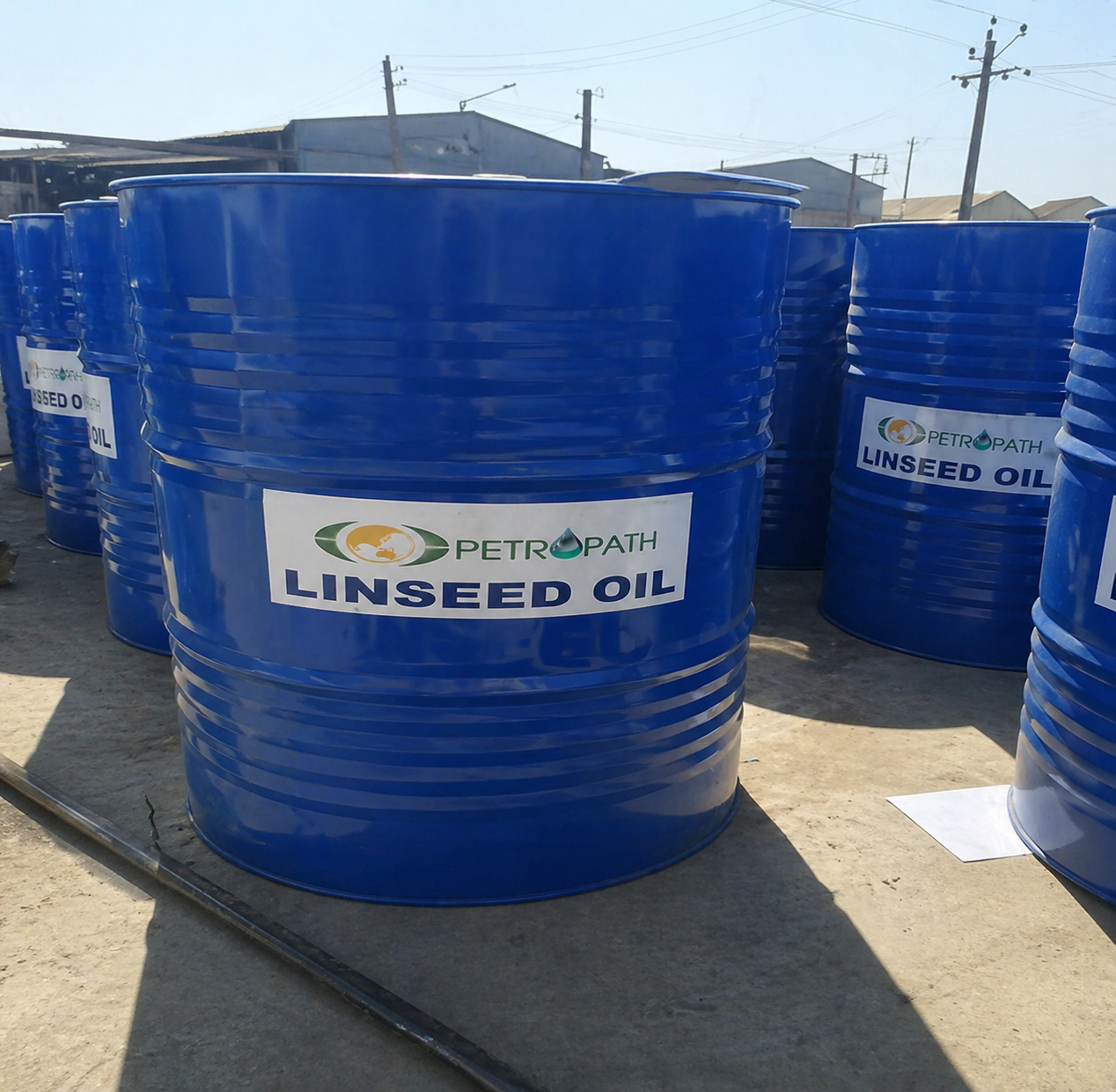
Linseed oil can be supplied according to project requirements, including:
- 200-liter drums
- IBC tanks
- Bulk tanker supply
- Custom packaging for specific projects
Packaging and supply arrangements can be selected according to transportation, storage, and field-consumption requirements.
Petropath Fluids: Oilfield Chemical Solutions
Petropath Fluids supplies specialty oilfield chemicals and drilling-fluid solutions for demanding exploration and drilling applications. Its product portfolio includes drilling-fluid additives, oil-based mud chemicals, water-based mud solutions, specialty oilfield chemicals, and technical support for drilling-fluid applications.
For projects evaluating Linseed Oil or other vegetable-derived drilling-fluid components, product selection should be based on the required fluid properties, operating conditions, compatibility testing, and applicable environmental requirements.
- Enhanced Lubrication: Reduces friction between drill strings, drill bits, and the wellbore.
- Eco-Friendly: It is non-toxic, biodegradable, and safe for marine and land environments.
- No Core Staining: It facilitates long coring runs without damaging or staining the core samples.
- Direct Swabbing: Manually smeared with a brush inside the core barrel inner tubes.
- Inline Systems: Incorporated into the drill fluid using a suction hose applicator.
- Tank Flushing: Added directly to holding tanks or flushing water systems.
Yes, in many exploration and core drilling applications, linseed soap is used to replace petroleum-based pipe dopes and greases. Because it is water-soluble, it rinses off easily and will not leave behind chemical residues that disrupt geological testing.
Research shows that linseed oil performs well alongside organic clays for rheology control, even resisting degradation under high-temperature conditions. However, for extremely deep, directional, and high-pressure drilling, it is often blended with specialized extreme pressure (EP) additives to maintain viscosity.
Conclusion
Linseed Oil provides a renewable vegetable-derived option for specialized drilling-fluid formulations where lubrication, fluid performance, and sustainability are important considerations. Its potential role in oil-based mud systems, lubricity enhancement, and vegetable-oil-based drilling fluids makes it relevant to modern drilling programs.
As the oil and gas industry continues to evaluate more sustainable drilling technologies, vegetable-derived fluid components can play a role in developing formulations that balance operational requirements with environmental considerations. Proper laboratory testing and formulation design remain essential for achieving consistent performance in actual drilling conditions.
For product inquiries, bulk orders, or technical support related to Linseed Oil drilling fluid solutions, connect with our expert team today. We deliver customized solutions to enhance drilling performance while maintaining environmental responsibility.