
Mud Pump in Oil & Gas Drilling: Performance, Benefits & Applications
Introduction
A Mud Pump in Oil & Gas Drilling plays a vital role in maintaining efficient, safe, and continuous drilling operations. As drilling projects move into deeper formations, high-pressure environments, and challenging geological conditions, reliable drilling fluid circulation becomes increasingly important. Drilling fluid, commonly known as drilling mud, cools and lubricates the drill bit, carries rock cuttings to the surface, supports wellbore stability, and helps maintain formation pressure.
A dependable pumping system enables these functions by delivering drilling fluid through the drill string and back to the surface through the annular space. Petropath Fluids provides drilling fluid and oilfield equipment solutions designed to support demanding drilling applications. Selecting the appropriate pump capacity, pressure rating, and configuration helps operators improve circulation efficiency and maintain reliable performance throughout drilling operations.
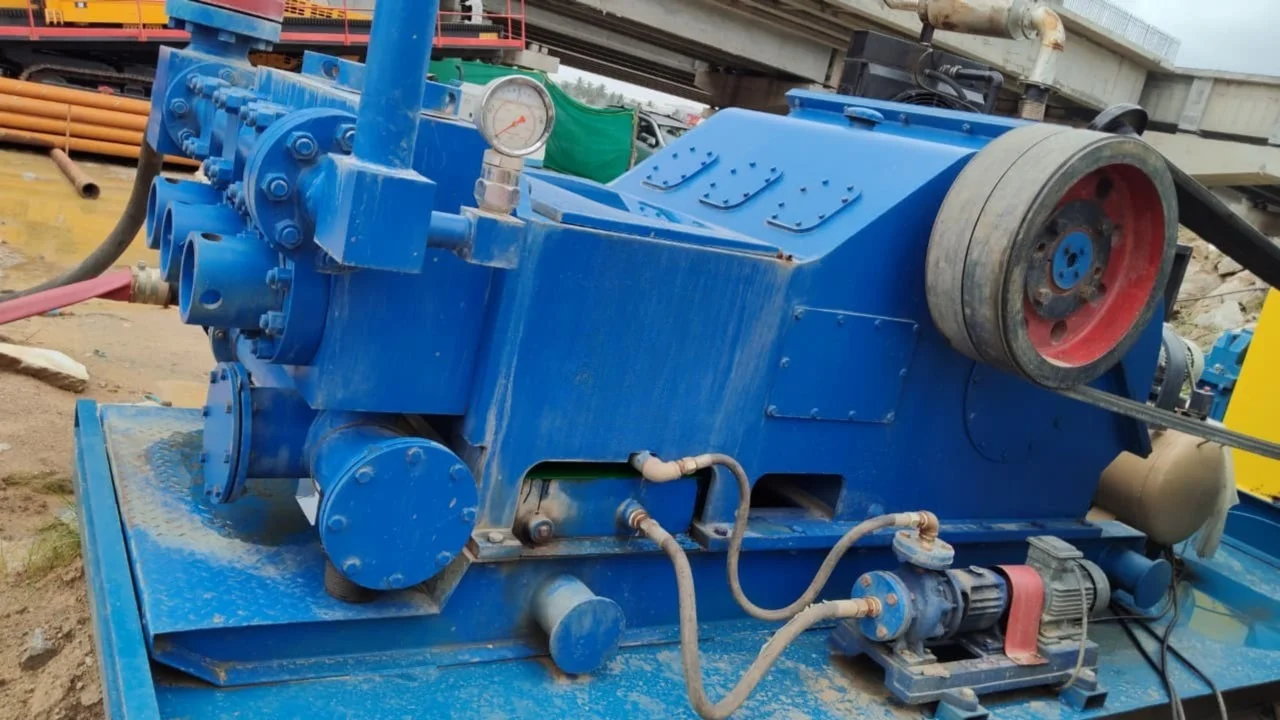
What Is a Mud Pump in Oil & Gas Drilling?
A Mud Pump in Oil & Gas Drilling is a positive-displacement reciprocating pump that converts mechanical power into hydraulic energy to circulate drilling fluid at controlled flow rates and high pressures. It draws mud from surface tanks and forces it through the standpipe, rotary hose, and drill string toward the drill bit.
After passing through the bit nozzles, the drilling fluid returns to the surface through the annulus, carrying drilled cuttings with it. This continuous circulation supports hole cleaning, temperature management, and well control.
Unlike conventional centrifugal pumps, a high-pressure drilling mud pump is designed for the demanding pressure and flow requirements of drilling operations. Triplex configurations, which use three reciprocating pistons or plungers, are widely used because they provide practical flow delivery, serviceability, and operational flexibility.
Key Features of a High-Performance Drilling Mud Pump
Choosing the right equipment involves evaluating its mechanical design, operating limits, maintenance requirements, and compatibility with the drilling fluid.
1. High-Pressure Operating Capability
Deep wells and demanding drilling conditions require sufficient pressure to circulate fluid through the drill string and overcome hydraulic resistance. The required pressure depends on well depth, fluid properties, pipe dimensions, and bit-nozzle configuration. Pump selection should therefore match the hydraulic requirements of the specific drilling program.
2. Triplex Pump Configuration
A Triplex Mud Pump uses three reciprocating pumping elements to deliver drilling fluid. This configuration supports consistent circulation and can help reduce flow pulsation compared with simpler reciprocating arrangements. Proper maintenance of pistons, liners, valves, and seals is essential for dependable operation.
3. Heavy-Duty Construction
An Oilfield Drilling Pump must withstand abrasive solids, continuous operation, mechanical loads, and challenging field conditions. Durable fluid-end components and suitable materials help manage wear and extend component service life when supported by appropriate operating practices.
4. Adjustable Flow Capacity
Different drilling applications require different circulation rates. Interchangeable liner sizes and suitable operating speeds can help operators adjust pump output to meet hydraulic requirements. Pressure, power limitations, and equipment ratings must always be considered when changing operating conditions.
5. Maintenance-Friendly Components
Replaceable liners, pistons, valves, valve seats, and sealing components simplify inspection and servicing. Routine maintenance helps identify wear early, reduce unexpected downtime, and maintain dependable pumping performance.
6. Standards and Quality Requirements
An API 7K Mud Pump should be selected according to applicable equipment specifications, operating requirements, and documented compliance. Buyers should verify the relevant certification, inspection records, and manufacturer documentation for the exact pump model before procurement.
Technical Specifications of a Mud Pump
The following specifications provide a preliminary reference for evaluating drilling pump requirements. Actual values depend on the selected model and configuration.
| Parameter | Reference specification |
|---|---|
| Pump type | Triplex reciprocating piston/plunger pump |
| Power range | 500–2,200 HP |
| Maximum pressure | Up to 7,500 psi |
| Liner size | 4–7.5 inches |
| Stroke length | 8–12 inches |
| Flow rate | 200–1,000 GPM |
| Pump speed | 120–150 RPM |
| Valve arrangement | Replaceable valve components |
| Lubrication | Splash or forced lubrication, depending on design |
| Cooling | As specified by the selected model |
| Compliance | Verify applicable API 7K and ISO documentation |
These figures are indicative ranges, not a guarantee that every pump supports all listed values simultaneously. Before purchasing a Mud Pump in Oil & Gas Drilling, confirm the manufacturer’s datasheet, rated input power, pressure-flow relationship, operating speed, and fluid-end configuration.
Benefits of Using a Drilling Mud Pump
Efficient Drilling Fluid Circulation
Reliable circulation transports cuttings away from the drill bit and supports effective hole cleaning. Appropriate flow rates also help manage drilling temperatures and maintain the intended drilling fluid properties.
Better Well Control Support
Drilling fluid contributes to hydrostatic pressure within the wellbore. Consistent circulation supports the drilling program, but safe well control also depends on correct mud density, monitoring systems, barrier management, and established operating procedures.
Reduced Operational Downtime
A well-maintained pump with suitable components can reduce unexpected failures and interruptions. Planned inspections, spare-part availability, and timely servicing contribute to greater equipment availability.
Improved Cost Management
Matching pump capacity to actual drilling requirements helps avoid unnecessary energy consumption and equipment stress. Durable components and preventive maintenance can also reduce repair costs over the equipment’s service life.
Versatility Across Drilling Projects
Depending on its design and ratings, a drilling pump can support conventional oil and gas wells, directional drilling, horizontal wells, geothermal projects, and selected workover operations.
Applications of Mud Pumps in the Oil and Gas Industry
A Mud Pump in Oil & Gas Drilling supports several drilling environments where reliable fluid circulation is essential.
Onshore drilling rigs: Circulates drilling fluids during land-based exploration and development.
Offshore drilling platforms: Supports drilling operations subject to strict equipment and safety requirements.
Directional and horizontal wells: Delivers the circulation needed for complex well trajectories and effective hole cleaning.
Geothermal drilling: Helps circulate fluids in formations where temperature management is an important consideration.
Workover and well-servicing operations: Supports compatible fluid-handling requirements when the selected equipment is suitable for the application.
Every project has different hydraulic and operational demands. Equipment selection should account for well depth, drilling fluid characteristics, expected pressure losses, required flow rate, available power, and maintenance conditions.
How to Select the Right Mud Pump
Before choosing a pump, drilling contractors and procurement teams should evaluate several practical factors.
First, calculate the required flow rate and pressure based on the drilling program. Next, confirm that the pump’s rated power and fluid-end configuration can meet those requirements. Consider the drilling fluid’s density, solids content, abrasiveness, and chemical compatibility.
Review the availability of replacement parts, technical documentation, service support, and maintenance facilities. Finally, verify all applicable standards and model-specific performance ratings before finalizing procurement.
A properly selected Mud Pump in Oil & Gas Drilling can help operators achieve dependable fluid circulation while supporting equipment longevity and operational efficiency.
Why Choose Petropath Fluids?
Petropath Fluids (India) Ltd. serves the drilling industry with drilling fluid solutions and oilfield-related technical expertise. Understanding the relationship between fluid properties, circulation requirements, and operating conditions is important when planning equipment for demanding drilling environments.
For drilling contractors and project teams, the selection process should prioritize application suitability, documented technical specifications, maintenance support, and compliance verification. Discussing these requirements with the supplier helps identify an appropriate configuration for the intended operation.
Conclusion
A Mud Pump in Oil & Gas Drilling is a critical component of the drilling circulation system. Its ability to deliver drilling fluid at the required pressure and flow rate supports hole cleaning, temperature management, and wellbore stability.
By evaluating pump capacity, construction, maintenance requirements, and verified technical specifications, operators can make better-informed equipment decisions. Contact Petropath Fluids (India) Ltd. to discuss your drilling fluid requirements and explore solutions suited to your project’s operating conditions.
We provide worldwide delivery, custom configurations, and technical support tailored to your operational needs.