
Mud Recycling Units: Advanced Solutions for Efficient and Sustainable Drilling
Introduction
Modern drilling projects require efficient fluid management to maintain productivity, control operating expenses, and minimize environmental impact. Mud Recycling Units provide an effective solution by separating drill cuttings and unwanted solids from drilling fluids, allowing the treated fluid to be reused throughout drilling operations.
Applications such as Horizontal Directional Drilling (HDD), geothermal exploration, water well drilling, tunneling, and piling depend on reliable drilling fluid management. As drilling progresses, fluids accumulate soil, sand, rock fragments, and other suspended particles. Disposing of contaminated mud and preparing fresh fluid for every stage can increase water consumption, waste generation, and project costs.
A properly configured recycling system helps operators recover usable drilling fluids, improve resource utilization, and maintain more consistent drilling performance. For contractors working in demanding environments, investing in reliable recycling technology can contribute to more economical and sustainable operations.
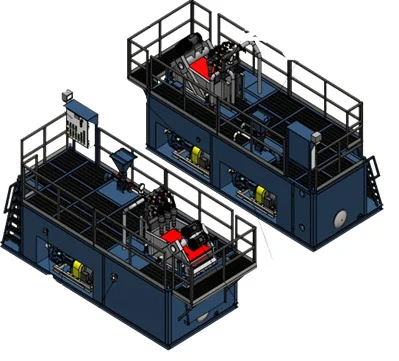
Why Mud Recycling Units Are Essential for Modern Drilling
Drilling fluids perform several essential functions, including borehole stabilization, drill-bit cooling, equipment lubrication, and the transportation of cuttings to the surface. However, accumulating solids can change fluid properties and reduce its effectiveness.
Mud Recycling Units address this challenge through controlled separation and fluid recovery. Depending on the system design and drilling conditions, equipment may incorporate screening, hydrocyclone separation, and centrifugation to remove particles of different sizes.
By maintaining suitable fluid properties, operators can support smoother drilling operations, reduce unnecessary fluid replacement, and limit abrasive wear on pumps and other equipment. These benefits are particularly valuable on projects where uninterrupted circulation and consistent fluid performance are important.
Major Applications of Mud Recycling Units
1. Horizontal Directional Drilling (HDD)
Horizontal Directional Drilling requires dependable drilling fluid circulation to support borehole stability, reduce friction, and transport cuttings. A Mud Recycling System for HDD separates excavated solids from reusable fluid, helping contractors reduce freshwater requirements and drilling waste.
These systems are useful for utility installations, pipeline crossings, telecommunications infrastructure, and other underground construction projects. Selecting equipment with suitable processing capacity helps maintain fluid quality during demanding drilling operations.
2. Geothermal Drilling
Geothermal projects often involve challenging subsurface conditions and elevated temperatures. Effective fluid management helps operators maintain suitable drilling fluid properties while reducing the volume of spent mud requiring disposal.
Recycling can also reduce the demand for replacement water and drilling materials. The appropriate configuration depends on fluid characteristics, solids loading, operating temperature, and project-specific environmental requirements.
3. Water Well Drilling
Water well drilling generates slurry containing soil, sand, and rock cuttings. A reliable Drilling Fluid Recycling System allows contractors to recover usable fluid and manage accumulated solids more effectively.
Recycling supports borehole stability, improves resource utilization, and helps reduce waste handling requirements. System capacity should be matched to drilling depth, ground conditions, and the expected volume of contaminated fluid.
4. Tunnel Boring and Slurry Treatment
Tunnel boring and slurry-based excavation can generate substantial quantities of solids mixed with water or drilling fluid. Separation equipment helps recover reusable liquid while concentrating solids for appropriate handling.
Integrating a suitable recycling system can improve material management, reduce slurry disposal volumes, and support continuous excavation. The equipment selection should reflect the particle-size distribution and characteristics of the excavated material.
5. Piling and Pipe Jacking
Piling and pipe jacking projects may use drilling fluids to support ground stability and facilitate excavation. Recycling helps contractors recover usable fluid, manage suspended solids, and reduce the need for repeated fluid preparation.
This approach can be particularly beneficial on large construction sites where space, water availability, and waste transportation affect project efficiency.
Key Benefits of Drilling Mud Recycling Equipment
Modern Drilling Mud Recycling Equipment offers several operational advantages when correctly selected and maintained.
Lower operating costs: Recovering usable drilling fluid can reduce replacement-fluid requirements and waste transportation expenses.
Reduced environmental impact: Recycling can lower freshwater consumption and the volume of fluid requiring disposal.
Improved drilling efficiency: Consistent fluid properties help support dependable circulation and cuttings transport.
Equipment protection: Removing abrasive solids can help reduce wear on pumps, pipelines, and other fluid-handling components.
Better waste management: Concentrating separated solids simplifies handling and supports appropriate disposal procedures.
Flexible applications: Configurations can be selected for HDD, geothermal drilling, tunneling, water wells, and construction projects.
Actual savings and performance depend on fluid composition, system capacity, operating practices, and site conditions.
How Mud Recycling Units Work
The treatment process generally involves several stages, although the exact arrangement varies by application.
1. Primary screening: Shale shakers or vibrating screens remove larger cuttings and coarse solids from returning drilling fluid.
2. Fine-solids separation: Hydrocyclones, desanders, and desilters separate smaller particles using centrifugal forces, depending on the system configuration.
3. Centrifugal treatment: Where required, decanter centrifuges remove finer suspended solids to improve fluid recovery.
4. Fluid collection and reuse: The treated fluid enters a storage tank, where its properties can be checked and adjusted before returning to the drilling operation.
5. Solids handling: Separated cuttings and waste are collected for suitable transportation, treatment, or disposal.
Correct equipment sizing, regular maintenance, and appropriate fluid testing are essential for reliable performance.
How to Select the Right Mud Recycling System
Before choosing a system, evaluate the required processing capacity, drilling method, fluid characteristics, particle sizes, site footprint, and available utilities. Contractors should also consider transport requirements, maintenance accessibility, automation, and the expected volume of solids.
Working with an experienced Mud Recycling Units Manufacturer can help identify a configuration that matches operational requirements. Request technical specifications and confirm that the proposed equipment is suitable for the intended drilling fluid and site conditions.
Why Choose Petropath Fluids (India) Ltd.?
Petropath Fluids (India) Ltd. supports drilling-fluid management requirements across demanding drilling and infrastructure applications. Choosing an appropriate recycling solution begins with understanding the project’s operating conditions, fluid properties, and solids-separation objectives.
When evaluating a recycling system for your project, consider:
Processing capacity matched to expected fluid returns
Appropriate separation stages for the solids encountered
Practical installation, operation, and maintenance requirements
Efficient recovery and handling of reusable drilling fluids
Technical guidance for application-specific requirements
Discuss your project specifications with the technical team to determine the most suitable configuration for your drilling operation.
- Initial Separation (Shale Shaker): Vibrating screens remove large rocks, gravel, and heavy debris.
- Sand & Silt Removal: The liquid moves through hydrocyclones (desanders and desilters) to strip away finer rock and sand particles.
- Reconditioning: Fresh water and drilling additives (e.g., bentonite or polymers) are mixed back into the clean fluid to regain the proper viscosity and density.
Disposing of liquid drilling waste is highly expensive and locations that accept it are increasingly rare, especially in urban areas. Recycling limits the need for fresh water, saves expensive additives, drastically reduces waste transportation costs, and ensures compliance with environmental regulations.
- Drill Rig GPM: Match the reclaimer’s processing capacity (Gallons Per Minute) to the fluid demands of your specific drill rig.
- Bore Length & Soil Type: Lengthier bores and heavy sand or clay require larger screen sizes and greater tank volumes to effectively filter the mud.
When a mud system operates at maximum efficiency, the same batch of drilling fluid can be cleaned and reused 2 to 3 times before it becomes too saturated with “rock flour” (ultra-fine silt) to be useful.
Mud systems are not “set-it-and-forget-it” machines. Operators must regularly check mud weight and sand content. Additionally, abrasive sand content can quickly wear down the impellers on centrifugal pumps. Regularly checking screen conditions, cleaning shaker decks, and draining tanks in cold weather prevents operational downtime.
Conclusion
Mud Recycling Units play an important role in modern drilling by helping recover reusable fluids, manage solids, and reduce unnecessary waste. From HDD and geothermal exploration to water well drilling, tunneling, and piling, an appropriately designed recycling system can improve resource utilization and support more efficient operations.
For contractors seeking dependable drilling fluid management, the right equipment selection can contribute to lower fluid consumption, improved operational consistency, and better waste handling. Evaluate your project requirements carefully and choose a solution designed for your drilling conditions.
Contact Petropath Fluids (India) Ltd. to discuss your drilling fluid management requirements and explore suitable recycling solutions.
Looking for a reliable and accurate Mud Recycling Units? Choose Petropath – where quality meets performance.
We provide worldwide delivery, custom configurations, and technical support tailored to your operational needs.