
Effluent Treatment Plant: Smart Solutions for Sustainable Industrial Wastewater Management
Introduction: Smarter Wastewater Management Starts Here
Industrial growth brings significant economic opportunities, but it also creates an important environmental responsibility: managing wastewater safely and efficiently. Industries such as oil and gas, drilling, refining, and petrochemical processing can generate wastewater containing hydrocarbons, chemicals, suspended solids, and other contaminants.
An Effluent Treatment Plant provides an engineered solution for treating these complex wastewater streams before reuse or discharge. Petropath Fluids India Limited offers advanced effluent treatment solutions designed to support environmental compliance, operational efficiency, and sustainable industrial practices.
From permanent installations to remote projects, Petropath’s treatment systems are engineered to deliver reliable wastewater management in demanding industrial environments.
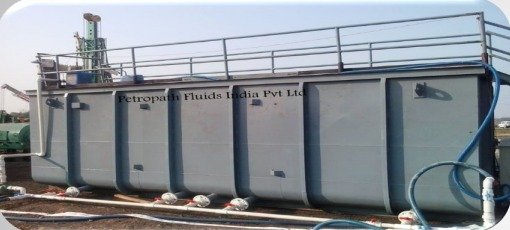
Why an Effluent Treatment Plant Is Essential for Industrial Sites
Untreated industrial wastewater can negatively affect groundwater, surface water, soil, and surrounding ecosystems. It can also create regulatory and operational challenges for industries that must comply with environmental standards.
A properly designed Effluent Treatment Plant helps remove unwanted contaminants and prepares wastewater for safe discharge or further treatment.
Key benefits include:
Improved compliance with applicable environmental requirements
Protection of groundwater and surface-water resources
Reduction of environmental risks and potential liabilities
Better wastewater management and sludge handling
Improved sustainability performance
More efficient industrial operations
For industries operating in challenging environments, an appropriately engineered ETP can become an important part of the overall environmental management strategy.
Advanced Technology for Industrial Wastewater Treatment
Modern industrial wastewater requires more than a single treatment process. Petropath combines multiple treatment technologies to create efficient and adaptable systems based on wastewater characteristics and project requirements.
1. High-Efficiency Oil-Water Separation
Oil and hydrocarbons are common contaminants in oil and gas wastewater. Specialized separation systems help remove free oil and hydrocarbons before wastewater enters subsequent treatment stages.
Effective oil-water separation can improve downstream treatment performance and contribute to better treated-water quality.
2. Chemical Treatment and Flocculation
Chemical treatment can help destabilize suspended particles and improve their separation from wastewater. Controlled chemical dosing and flocculation support efficient removal of contaminants while improving water clarity.
This stage is particularly useful when wastewater contains fine suspended solids that are difficult to remove through basic separation methods.
3. Multi-Stage Filtration
Filtration provides an additional polishing stage after primary and chemical treatment. Depending on the application, systems may incorporate sand filtration, activated carbon filtration, and other polishing technologies.
These stages help reduce remaining suspended particles and improve the quality of treated wastewater.
4. Sludge Dewatering
Wastewater treatment generates sludge that must be handled efficiently. Sludge dewatering reduces water content and overall sludge volume, making transportation, storage, and disposal more manageable.
An efficient sludge management system can therefore improve the overall operating efficiency of an Effluent Treatment Plant.
Mobile ETP Systems for Remote and Dynamic Operations
Not every industrial project has the infrastructure or time required for a conventional fixed treatment plant. Drilling sites, temporary projects, remote oilfields, and emergency operations may require wastewater treatment systems that can be deployed quickly.
Petropath’s Mobile ETP Systems provide a flexible solution for these applications.
Advantages of Mobile ETP Systems
Compact and portable configuration
Rapid deployment at project locations
Suitable for remote drilling and oilfield operations
Modular treatment design
Reduced installation requirements
Flexible capacity based on project needs
Suitable for temporary or changing operations
Mobile systems can provide practical industrial wastewater treatment where permanent infrastructure may not be suitable.
Customizable Effluent Treatment Solutions
Wastewater composition varies significantly from one industrial facility to another. For this reason, a standard treatment configuration may not deliver optimal results for every application.
Petropath develops customized effluent treatment solutions according to wastewater characteristics, treatment objectives, site conditions, and required capacity.
Customization options can include:
Modular treatment stages
Automated chemical dosing
Monitoring and control panels
Sludge-handling systems
Containerized configurations
Skid-mounted designs
Remote monitoring options
Capacity ranges from 20 to 1000 m³/day
This adaptable approach allows an Effluent Treatment Plant to be configured for applications ranging from drilling operations to refineries and petrochemical facilities.
Key Features of Petropath ETP Systems
Petropath’s treatment systems are designed for industrial environments where reliability and durability are essential.
Important features include:
Advanced Treatment Technology for efficient contaminant removal
Eco-Friendly Operation to support responsible wastewater management
Mobile ETP Systems for flexible field deployment
Corrosion-Resistant Construction for demanding environments
Scalable Designs for different treatment capacities
Automated Controls for improved process monitoring
Modular Configurations for project-specific requirements
These features make the systems suitable for demanding oil and gas wastewater treatment applications.
Technical Highlights
Petropath’s Effluent Treatment Plant and mobile systems are engineered to support industrial wastewater treatment requirements across different operating conditions.
Typical specifications include:
Treatment capacity: 20–1000 m³/day
Construction: Heavy-duty, corrosion-resistant materials
Design: Modular, containerized, or skid-mounted
Optional features: Sludge handling, automation, and remote monitoring
Application: Industrial, drilling, oilfield, refinery, and petrochemical wastewater
Actual system configuration can be selected according to wastewater characteristics and project-specific treatment requirements.
Applications Across Industrial Sectors
Petropath’s ETP technology can support wastewater management across multiple industrial applications, including:
Drilling and production wastewater treatment
Oilfield wastewater management
Refinery effluent treatment
Petrochemical wastewater processing
Remote-field wastewater treatment
Temporary and emergency wastewater treatment
By combining appropriate treatment stages with flexible engineering, an Effluent Treatment Plant can help industries manage wastewater more effectively across both permanent and temporary facilities.
The effluent goes through physical screening to remove solids, followed by equalization for consistent flow. Next, physico-chemical treatments break down oils and chemicals, while biological tanks (like MBBR or SBR) reduce organic pollutants. Finally, sand/carbon filters and reverse osmosis (RO) prepare the water for safe reuse.
ZLD is an advanced treatment strategy that totally eliminates liquid waste from industrial facilities. Using technologies like crystallizers and thermal evaporators, a ZLD system recovers up to 99% of water for plant operations, leaving only solid waste for safe disposal.
While advanced automation limits the need for 24/7 manual oversight, trained personnel are still required to monitor sensor levels, balance chemical tanks, and ensure system compliance. Many modern systems send real-time alerts to mobile phones if biological or mechanical imbalances occur.
The physical footprint of an ETP depends on the daily volume of waste and the technology deployed. Compact, modern membrane-based systems (like MBR) require significantly less land than traditional systems with massive open-air settling tanks
Why Choose Petropath for Effluent Treatment?
Selecting the right wastewater treatment partner is essential for achieving reliable performance and long-term operational value.
Petropath Fluids India Limited brings expertise in industrial and oilfield applications, providing engineered solutions designed around real-world operating conditions.
Key advantages include:
Sustainable engineering approach
Expertise in oil and gas wastewater applications
Robust systems for demanding environments
Flexible mobile and fixed configurations
End-to-end project execution
Scalable treatment capacities
Focus on environmental compliance and operational efficiency
The goal is not simply to treat wastewater but to provide a dependable solution that integrates with the wider industrial operation.
Conclusion: A Smarter Approach to Industrial Wastewater Management
Effective wastewater management is becoming increasingly important for industries seeking to balance productivity with environmental responsibility. A properly engineered Effluent Treatment Plant can help reduce contaminants, improve wastewater handling, support compliance, and minimize environmental risks.
Petropath’s fixed and Mobile ETP Systems provide flexible options for industries operating in conventional facilities, drilling sites, remote locations, and temporary projects.
With advanced separation, chemical treatment, filtration, sludge management, automation, and modular engineering, Petropath provides practical effluent treatment solutions for challenging industrial applications.
For industries looking for cleaner operations and more responsible wastewater management, investing in a professionally engineered ETP system can be an important step toward a more sustainable future.