
Extreme Pressure Lubricant: 7 Powerful Benefits for High-Performance Drilling
Introduction
Modern oil and gas drilling requires high efficiency, reliable equipment performance, and precise control of drilling conditions. As wells become deeper, more directional, and increasingly complex, friction between the drill string and wellbore can become a major operational challenge. Excessive friction may increase torque and drag, accelerate equipment wear, and reduce drilling efficiency.
An Extreme Pressure Lubricant is designed to address these challenges by improving the lubricity of drilling fluid systems. By reducing friction between interacting metal surfaces and drilling components, this specialized additive can support smoother drill string movement and help maintain consistent drilling performance.
In demanding applications such as horizontal, directional, extended-reach, and high-angle drilling, effective lubrication can contribute to better operational control and equipment protection.
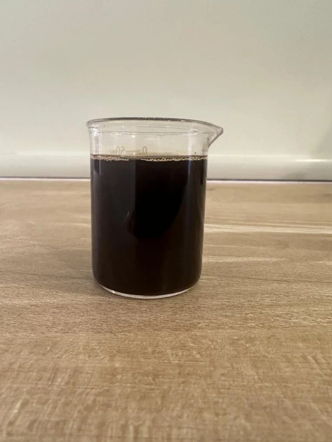
What Is an Extreme Pressure Lubricant?
An Extreme Pressure Lubricant is a drilling fluid additive formulated to reduce friction under high mechanical loads. During drilling, drill pipes, collars, casing, and other components can experience significant contact with the wellbore and formation.
When friction increases, the drilling system may experience higher torque and drag. A suitable lubricant helps create a lubricating film between contacting surfaces, reducing resistance and supporting smoother movement of the drill string.
The effectiveness of a lubricant depends on its formulation, concentration, drilling-fluid chemistry, temperature, pressure, and well conditions. Therefore, product selection and treatment should be based on the requirements of the specific drilling operation.
Why Lubrication Matters in Drilling Operations
Friction becomes particularly important in wells with long open-hole sections, high inclination, extended horizontal intervals, or complex trajectories. Inadequate lubrication can increase mechanical resistance and place additional loads on drilling equipment.
Using an Extreme Pressure Lubricant can help address several common drilling challenges, including:
- High torque and drag
- Increased mechanical wear
- Difficult drill string movement
- Reduced drilling efficiency
- Greater energy requirements
- Potential equipment downtime
Improved lubrication can therefore contribute to smoother drilling and more efficient use of drilling equipment.
7 Key Benefits of Extreme Pressure Lubricant
1. Reduces Torque and Drag
One of the primary advantages of an Extreme Pressure Lubricant is its ability to reduce frictional resistance within the wellbore. Lower friction can help decrease torque and drag acting on the drill string, particularly in deviated and horizontal wells.
This can make drill string movement more manageable and support improved drilling performance.
2. Improves Drilling Fluid Lubricity
A high-quality drilling fluid lubricant enhances the lubricating characteristics of the mud system. Better lubricity helps reduce contact resistance between drilling components and the wellbore.
Maintaining appropriate drilling fluid lubricity is especially important when drilling complex well profiles where frictional forces can become significant.
3. Supports Drilling Efficiency
Reduced friction means less mechanical resistance during drilling. An Extreme Pressure Lubricant can help create smoother operating conditions, potentially supporting more efficient drilling and consistent performance.
In some applications, improved lubrication may also contribute to maintaining or improving the rate of penetration, depending on the overall drilling system and formation conditions.
4. Helps Protect Drilling Equipment
Continuous friction can contribute to wear on drill pipes, drill collars, casing, and other components. Lubrication helps minimize direct frictional interaction and may reduce unnecessary mechanical wear.
Better equipment protection can contribute to longer component service life and fewer maintenance-related interruptions.
5. Benefits Directional and Horizontal Wells
Directional and horizontal drilling often involves increased drill string contact with the wellbore. These conditions can produce substantial torque and drag.
An Extreme Pressure Lubricant for drilling can be incorporated into suitable drilling-fluid systems to improve lubricity and support smoother movement through complex well trajectories.
6. Supports Extended-Reach Drilling
Extended-reach drilling presents additional friction challenges because the drill string travels through long well sections. As contact length increases, managing torque and drag becomes increasingly important.
A suitable lubricant can help reduce frictional resistance and support efficient drilling across extended wellbore intervals.
7. Can Help Reduce Operational Costs
Improved lubrication may help reduce equipment wear, excessive mechanical loading, and avoidable downtime. By supporting smoother drilling conditions, lubrication management can contribute to better operational efficiency.
The overall economic benefit depends on well conditions, drilling-fluid design, lubricant concentration, and operating practices.
Common Applications
An Extreme Pressure Lubricant can be considered for drilling environments where friction management is a key concern. Typical applications include:
- Directional drilling
- Horizontal drilling
- Extended-reach drilling (ERD)
- High-angle wells
- Deviated wells
- Deep well drilling
- Complex well trajectories
It can be used as part of an appropriately designed drilling-fluid additive package, subject to compatibility and performance testing.
Compatibility With Drilling Fluid Systems
Lubricant performance depends heavily on the drilling-fluid formulation. Depending on the product chemistry, lubricants may be suitable for water-based mud systems and selected oil-based mud applications.
Before field-scale treatment, a laboratory or pilot mud test should be conducted to evaluate compatibility with the existing fluid system. Testing can help determine the appropriate concentration and identify potential effects on rheology, filtration, emulsion stability, and other important drilling-fluid properties.
Recommended Treatment and Handling
Treatment concentration should always follow the product manufacturer’s technical recommendations rather than relying on a universal dosage. Actual requirements may vary according to well depth, inclination, mud chemistry, formation conditions, temperature, and measured torque and drag.
The product should be handled according to its Safety Data Sheet (SDS). Appropriate personal protective equipment, including gloves and eye protection, should be used during handling. Containers should generally be stored in a suitable cool, dry location away from incompatible materials and excessive heat.
In high-pressure and high-temperature conditions (150°C to 200°C+), standard fluid films squeeze out. EP lubricants contain specialized synthetic esters and boundary lubrication agents that react with the metal surfaces to create a sacrificial, low-shear-strength protective film. This allows the drill string and tools to glide efficiently.
Yes. Environmentally friendly water-soluble and water-dispersible EP lubricants (like SDF–LUBE W or EPL-101-W ) are formulated to blend directly into freshwater or salt-water WBM systems. They do not degrade the rheology, gel strength, or viscosity of the drilling mud.
By lowering the coefficient of friction between the drill string, casing, and formation walls, EP additives drastically reduce torque and drag. This directly limits differential wall sticking, prevents bit balling (where clay accumulates on the bit), and ensures the drill string does not lose mechanical power to friction.
Many modern industrial-grade EP fluids are designed to be non-toxic, non-corrosive, and fully biodegradable. Products like SDF–LUBE O or specialized ester-based compounds are engineered specifically to leave minimal environmental footprints while satisfying strict oilfield standards.
The choice largely depends on your drilling mud system and operating temperature. Deep, complex wells and high-density HPHT muds usually require oil-based or synthetic ester-based formulations, while conventional or shallow drilling often utilizes water-based EP options.
Conclusion
An Extreme Pressure Lubricant can play an important role in modern drilling-fluid programs where friction, torque, and drag are operational concerns. By improving drilling fluid lubricity, supporting smoother drill string movement, and helping protect drilling components, the right lubricant can contribute to more efficient drilling operations.
Its value is particularly relevant in horizontal, directional, extended-reach, and high-angle wells where friction management becomes increasingly important.
For the best results, lubricant selection should consider the complete drilling-fluid formulation and specific well conditions. Proper laboratory testing, dosage optimization, and field monitoring can help ensure that the lubrication program delivers reliable performance without compromising other drilling-fluid properties.