
Mud Balance for Drilling Fluids: Accurate Mud Weight Testing
Introduction
Accurate drilling fluid density is essential for maintaining well control, protecting formations, and improving drilling performance. Even a small variation in mud weight can affect hydrostatic pressure and potentially lead to problems such as formation instability, lost circulation, stuck pipe, or well kicks. This makes reliable Mud Balance for Drilling Fluids an essential testing instrument for drilling engineers, mud technicians, laboratories, and oilfield service companies.
Petropath provides industry-grade mud testing equipment designed for dependable performance in demanding field and laboratory environments. The Petropath mud balance enables drilling professionals to measure fluid density quickly and consistently, helping them maintain drilling fluids within the required operating range.
What Is a Mud Balance?
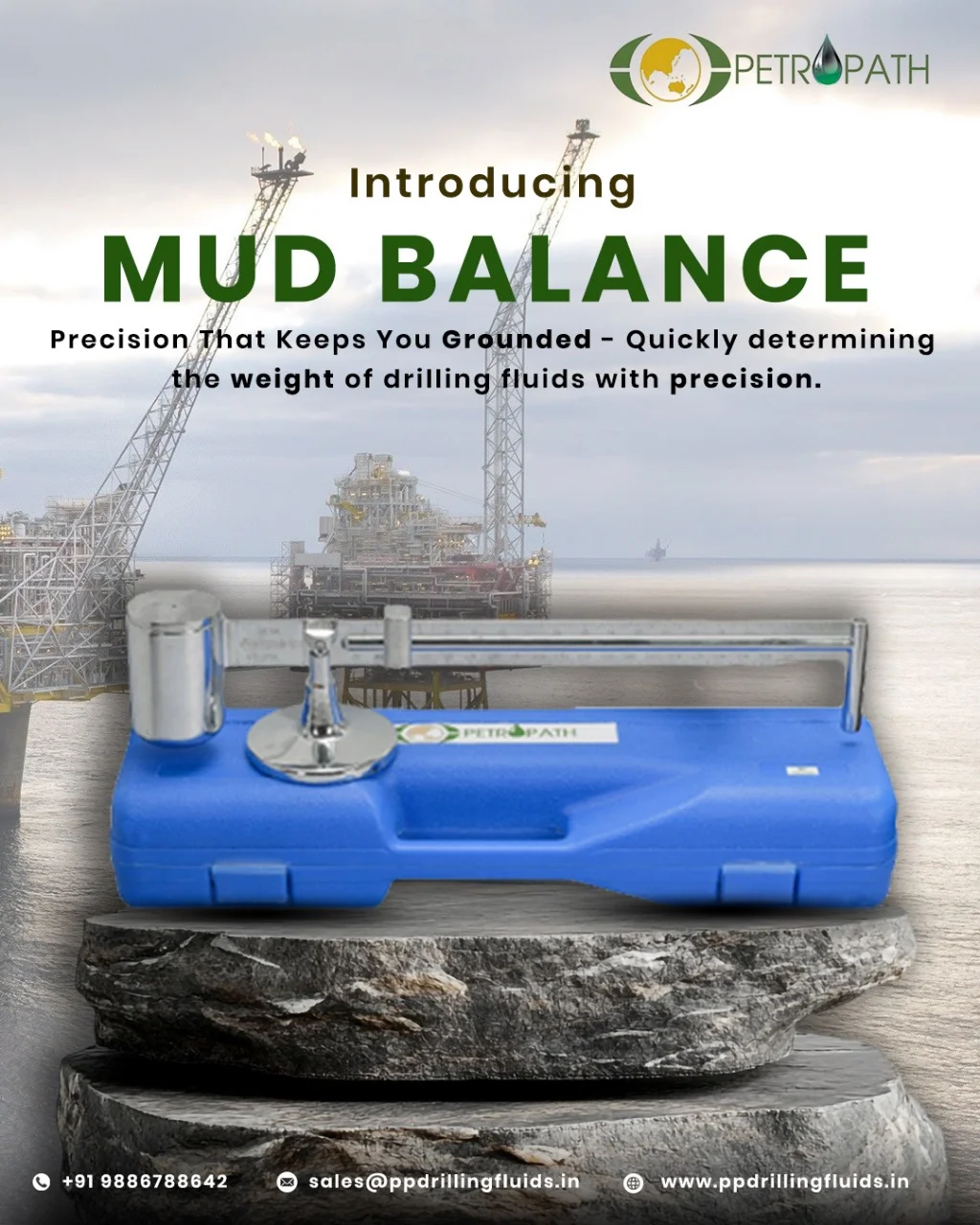
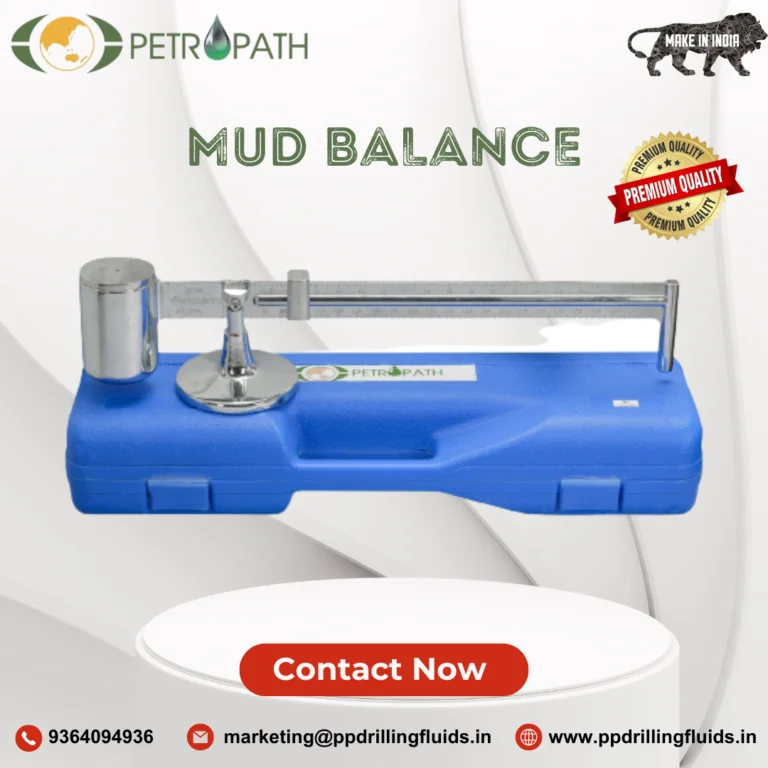
A Mud Balance for Drilling Fluids is a precision instrument used to determine the density or weight of drilling fluids. It is commonly used with water-based mud (WBM), oil-based mud (OBM), and synthetic-based mud (SBM).
Depending on the instrument scale, measurements can be obtained in commonly used units such as:
Pounds per gallon (ppg)
Specific gravity (SG)
Kilograms per cubic meter (kg/m³)
The basic testing process is straightforward. A representative drilling fluid sample is placed inside the calibrated mud cup, the lid is secured, and the instrument is balanced using its sliding counterweight. Once equilibrium is achieved, the mud density can be read directly from the graduated scale.
This simple operating principle makes mud balance equipment practical for routine drilling fluid testing at well sites, mud plants, laboratories, and training facilities.
Why Is Mud Weight Testing Important?
Drilling fluid density directly influences the hydrostatic pressure exerted on the wellbore. Maintaining the correct density helps ensure that formation pressure is properly controlled throughout drilling operations.
If the mud weight is too low, the hydrostatic pressure may not be sufficient to control formation fluids, increasing the possibility of kicks and well-control incidents. On the other hand, excessive density can increase pressure against the formation and contribute to lost circulation or formation damage.
Regular Mud Weight Testing allows drilling teams to identify changes in fluid density before they become operational problems. Reliable Drilling Fluid Density Measurement therefore supports:
Better wellbore pressure control
Improved wellbore stability
Reduced risk of kicks and lost circulation
Consistent drilling fluid properties
Better drilling-fluid treatment decisions
Reduced non-productive time
Improved overall drilling efficiency
Key Features of Petropath Mud Balance
Petropath’s Mud Balance Equipment is designed for accurate measurements while remaining practical for demanding oilfield environments. Its key features include:
High-Precision Measurement
A clearly graduated scale allows operators to determine drilling fluid density with reliable and repeatable readings. Multiple measurement units make the instrument suitable for different drilling applications.
Durable Construction
Oilfield testing equipment must withstand frequent handling and demanding working conditions. A robust mud cup, calibrated components, and durable construction help provide dependable service in both field and laboratory environments.
Secure Sample Handling
A properly fitted lid helps minimize sample loss and leakage during testing. Maintaining a representative sample is important for obtaining dependable density measurements.
Easy Operation
The straightforward balancing mechanism allows mud technicians to perform routine density checks without complicated procedures. This makes the instrument suitable for regular field testing.
Portable Design
Mud testing is frequently performed directly at the well site. A portable mud balance can be transported conveniently between laboratories, mud plants, and drilling locations.
Applications of Mud Balance for Drilling Fluids
A Mud Balance for Drilling Fluids can be used across a wide range of oilfield and laboratory applications. Common uses include measuring the density of WBM, OBM, and SBM systems and checking whether drilling fluid properties remain within the planned operating range.
Typical applications include:
Drilling fluid density testing
Wellsite mud monitoring
Mud plant quality control
Oilfield laboratory testing
Cement and spacer fluid density checks
Drilling fluid research and development
Training and educational laboratories
Onshore and offshore drilling operations
By providing quick density measurements, the instrument helps drilling teams make informed decisions about mud treatment and fluid management.
How to Get Reliable Mud Density Measurements
Correct testing practices are important for obtaining consistent results. Before testing, the mud sample should be representative of the drilling fluid being evaluated. The mud cup should be clean, properly filled, and free from trapped air or excessive contamination.
The lid should then be secured correctly before balancing the instrument. Operators should ensure that the instrument is properly calibrated and positioned on a stable surface. Regular inspection and cleaning can also help maintain measurement consistency over time.
Following appropriate testing procedures together with dependable Oilfield Mud Testing Equipment helps reduce measurement errors and supports better drilling-fluid management.
Why Choose Petropath Mud Testing Equipment?
Petropath develops and supplies oilfield testing equipment for drilling fluid monitoring and laboratory applications. Its mud balance is designed to combine practical operation, reliable measurement, and durable construction for demanding drilling environments.
For drilling contractors, mud engineers, laboratories, and oilfield service companies, dependable testing equipment can support better decision-making throughout the drilling process.
The key advantages include:
Reliable and repeatable density measurements
Easy operation and field handling
Durable construction for oilfield environments
Suitable for different drilling fluid systems
Practical use in field and laboratory applications
Support for routine drilling fluid quality control
Fill the clean, dry cup to the brim, place the lid on with a twisting motion, and allow excess fluid to expel through the top hole. Cover this hole with your finger, wipe the outside completely clean, and place the beam onto the fulcrum. Slide the weight (rider) along the arm until the built-in bubble is exactly centered, then read the density directly from the graduated scale.
The balance must be calibrated with fresh water (which has a known density of exactly 8.34 lb/gal or 1.00 SG at 70° F). Fill the cup with water and balance the arm; if the slider does not rest exactly on the water line, use the calibration screw or add/remove lead shot in the counterweight until it perfectly balances.
- Pounds per gallon (lb/gal) or ppg
- Specific gravity (SG)
- Pounds per cubic foot (lb/ft³)
- Pounds per square inch per 1,000 feet of depth (psi/1000 ft)
Standard mud balances can yield inaccurate readings if the fluid contains entrained air or gas bubbles. A pressurized mud balance compresses the sample via a built-in plunger and check valve. This forces any trapped gas into the liquid, restoring the true density of the fluid without interference from air pockets.
The most frequent errors occur from incomplete cleaning (mud left on the outside of the cup), trapped air in the sample cup, or an uncalibrated instrument. Operators must also ensure they are measuring on a flat, level surface and account for fluid temperature, which can slightly alter fluid density.
Conclusion
Accurate fluid density measurement is an important part of effective drilling-fluid management. A reliable Mud Balance for Drilling Fluids helps drilling professionals monitor mud weight, maintain appropriate hydrostatic pressure, and respond quickly to changes in drilling fluid properties.
From wellsite monitoring and mud plants to oilfield laboratories and training facilities, dependable mud balance equipment provides valuable data for safer and more efficient drilling operations.
Petropath’s mud testing equipment is designed to provide practical, consistent, and dependable performance for demanding drilling applications. Choosing the right Mud Balance for Drilling Fluids can help improve testing accuracy, support well-control decisions, and contribute to better overall drilling performance.
We provide worldwide delivery, custom configurations, and technical support tailored to your operational needs.