
Hematite for Drilling Fluids – High-Density Weighting Agent for Superior Well Control
Introduction
Maintaining precise well pressure is essential for safe and efficient oil and gas drilling. In deep, high-pressure, and high-temperature wells, conventional weighting materials may reach practical limitations. Hematite for Drilling Fluids provides a high-density solution that helps drilling engineers achieve the required mud weight while managing solids concentration and downhole pressure.
Hematite is a naturally occurring iron oxide mineral with high specific gravity, excellent thermal stability, and dependable performance in demanding drilling environments. It is used as a specialized weighting material in drilling and completion fluid systems where accurate density control is critical.
At Petropath, hematite is manufactured in-house under controlled production and quality procedures. This supports consistent particle sizing, batch uniformity, and reliable performance for demanding drilling programs across India and global markets.
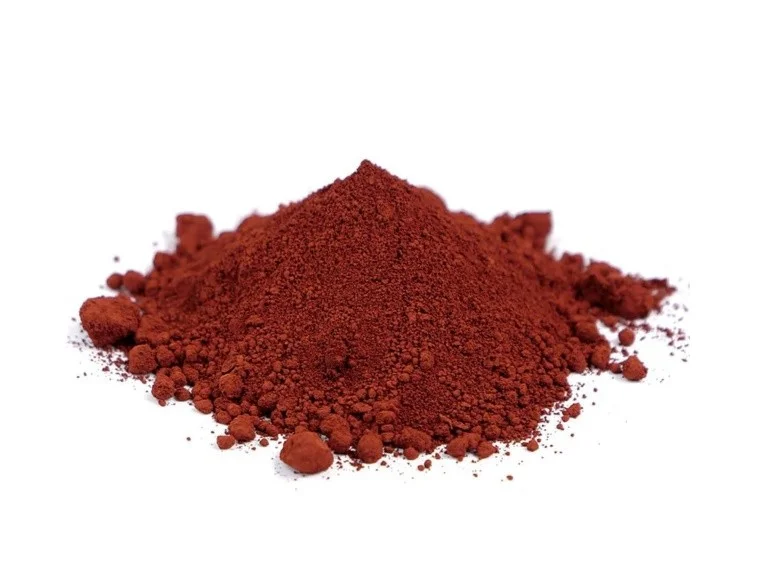
What Is Hematite for Drilling Fluids?
Hematite for Drilling Fluids is a high-density iron oxide weighting material with the chemical formula Fe₂O₃. Its primary function is to increase drilling fluid density so that hydrostatic pressure can be maintained at the required level during drilling operations.
With a typical specific gravity of approximately 5.0–5.3, hematite can provide higher density than conventional barite. This high density allows drilling fluid engineers to achieve target mud weights while potentially using less weighting material by volume.
As a hematite weighting agent, the material can be incorporated into appropriately designed water-based, oil-based, and synthetic-based drilling fluid systems. Its application depends on the well design, fluid formulation, temperature, pressure, and required rheological properties.
Why Hematite for Drilling Fluids Is Used in Critical Wells
Modern drilling projects frequently encounter narrow pressure windows, high formation pressures, elevated temperatures, and restricted annular clearances. These conditions require carefully engineered drilling fluids.
Key advantages of Hematite for Drilling Fluids include:
- High specific gravity: Helps drilling engineers formulate high-density mud systems.
- HPHT suitability: Provides thermal stability for demanding high-pressure, high-temperature applications.
- Efficient density control: Higher density can help reduce the volume of weighting material required for a target mud weight.
- Versatile application: Can be considered for WBM, OBM, and SBM formulations when properly engineered.
- Controlled particle sizing: Engineered particle distribution can support suspension and fluid-system performance.
- Well control support: Helps maintain the hydrostatic pressure required for challenging drilling conditions.
These characteristics make hematite particularly relevant to specialized and high-density drilling fluid designs.
In-House Manufactured Hematite by Petropath
Petropath manufactures its hematite in-house rather than depending entirely on third-party resellers. This approach provides greater control over production, processing, testing, and batch consistency.
The manufacturing process includes:
- Selection of suitable high-purity raw materials
- Precision grinding and micronizing
- Controlled particle size distribution
- Batch-wise quality testing
- Product validation against defined specifications
In-house manufacturing enables Petropath to maintain closer control over the characteristics of its Hematite for Drilling Fluids. Customized particle size distributions can also be developed according to specific drilling fluid requirements.
Applications of Hematite for Drilling Fluids
Hematite for Drilling Fluids can be used across several specialized oilfield applications where increased fluid density is required.
Typical applications include:
- High-density drilling mud systems
- HPHT drilling operations
- Deep and offshore drilling programs
- Pressure management and well control applications
- Specialized completion fluids
- Workover fluid systems
The material can be incorporated into different drilling fluid formulations depending on compatibility and engineering requirements. Proper laboratory testing and formulation design are important when selecting a weighting material for a particular well.
Hematite vs Barite for Drilling Fluids
The selection between hematite and barite depends on the required mud weight, well conditions, fluid formulation, and operational objectives.
| Parameter | Hematite | Barite |
|---|---|---|
| Typical Specific Gravity | 5.0–5.3 | Approximately 4.2 |
| Density Potential | High | Moderate |
| Material Volume for Equivalent Density | Potentially lower | Potentially higher |
| High-Density Applications | Well suited | Widely used |
| HPHT Applications | Suitable when properly formulated | Widely used depending on system |
The higher specific gravity of hematite makes it particularly useful when a drilling program requires high-density mud while managing the total solids volume. However, weighting-material selection should always be based on the complete drilling-fluid design and well conditions rather than density alone.
Technical Specifications of Petropath Hematite
Typical properties of Petropath Hematite for Drilling Fluids include:
- Chemical Formula: Fe₂O₃
- Appearance: Reddish-brown powder
- Specific Gravity: 5.0–5.3
- Bulk Density: 2.4–2.6 g/cm³
- Particle Size: API or customized specification
- Solubility in Water: Insoluble
- pH of Suspension: Neutral
- Thermal Stability: Suitable for HPHT applications
Customized particle size distributions are available for drilling fluid formulations with specific operational requirements.
Quality Assurance and Testing
Consistent quality is essential when weighting materials are used in critical drilling operations. Petropath applies batch-level quality control to help maintain predictable product characteristics.
Quality checks can include:
- Specific gravity and density verification
- Particle size distribution analysis
- Contamination monitoring
- Batch consistency checks
- Performance evaluation against applicable oilfield requirements
These controls help drilling-fluid specialists select Hematite for Drilling Fluids with greater confidence in density performance and material consistency.
Why Choose Petropath for Hematite?
Choosing an appropriate hematite supplier is an important part of maintaining consistent drilling-fluid performance. Petropath combines in-house manufacturing with oilfield product knowledge and quality-control procedures.
Key advantages include:
- In-house hematite manufacturing
- Consistent product quality
- Controlled particle size
- Batch-wise testing
- Customized specifications
- Technical support for drilling fluid applications
- Supply capabilities for India and global markets
For drilling programs requiring a reliable Hematite Weighting Agent, Petropath provides a controlled manufacturing and supply approach designed around demanding oilfield applications.
Hematite has a significantly higher specific gravity (typically 5.0 to 5.3) compared to barite, which sits around 4.2. Because hematite is denser, engineers can achieve the exact same mud weight while using a much smaller volume of solid particles. This translates to less total solids in the mud, leading to improved rheology, faster rates of penetration, and ultimately lower overall drilling costs.
Hematite is incredibly versatile. It can be successfully blended with all types of drilling fluids, including freshwater, seawater, and oil-based muds. It is most frequently favored in high-density oil-base muds and as a heavy “kill fluid” used to control pressure during well emergencies.
Because hematite adds density without requiring a massive volume of solids, it helps prevent the fluid from becoming too thick. It generally maintains the ideal Yield Point to Plastic Viscosity (YP/PV) ratio, ensuring that the drilling mud has the necessary gel strength to suspend drilled rock cuttings and transport them out of the borehole.
One of the primary challenges with hematite is “sag,” where the heavy particles tend to settle at the bottom of the wellbore, especially under high pressure and high-temperature conditions. To prevent this, operators often utilize anti-sag additives (like perlite) or blend hematite with materials like micronized ilmenite to keep the solid particles evenly suspended.
Yes, high-quality, oilfield-grade hematite conforms to strict industry regulations such as API 13A (the standard for drilling fluid materials). To ensure it meets these requirements, the powdered ore is carefully ground to the correct particle size, washed of impurities, and tested for abrasiveness.
Conclusion
Hematite for Drilling Fluids is a high-density weighting material used to increase drilling-fluid density and support pressure management in demanding well conditions. Its high specific gravity makes it particularly valuable for high-density mud systems, while its thermal stability and controlled particle characteristics support specialized drilling applications.
From HPHT wells to deep and offshore operations, properly engineered hematite can provide an effective option when drilling-fluid density requirements are high. Petropath’s in-house manufacturing, quality testing, and customized particle-size capabilities help deliver consistent Hematite for Drilling Fluids for modern drilling and completion requirements.
For operators and drilling-fluid specialists seeking a dependable Hematite Weighting Agent, Petropath offers an oilfield-focused solution backed by controlled manufacturing and technical expertise.