
High-Pressure High-Temperature Aging Cell for Reliable HPHT Drilling Fluid Testing
Introduction
Modern oil and gas drilling operations increasingly require drilling fluids to perform reliably under demanding downhole conditions. High pressure and high temperature can significantly affect fluid stability, rheology, filtration behavior, and additive performance. Laboratory testing under simulated conditions is therefore essential before a drilling fluid system is deployed in the field.
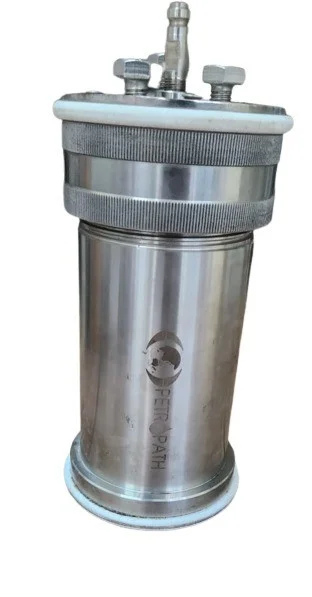
The High-Pressure High-Temperature Aging Cell is designed to help drilling fluid laboratories evaluate how mud systems behave after exposure to elevated pressure and temperature. It provides a controlled environment for static and dynamic aging studies, supporting drilling fluid research, formulation development, quality control, and performance validation.
Manufactured using high-grade stainless steel, the equipment is engineered for dependable laboratory use and compatibility with standard roller oven systems and heating chambers.
What Is a High-Pressure High-Temperature Aging Cell?
A High-Pressure High-Temperature Aging Cell is a laboratory vessel used to condition drilling fluids under controlled HPHT conditions. Aging allows laboratory personnel to simulate the thermal and pressure exposure that drilling mud may experience during actual drilling operations.
By testing a fluid before and after aging, engineers can evaluate changes in important properties and determine whether the formulation can maintain its required performance.
Petropath’s aging cell features a 500 mL internal volume, maximum working pressure of up to 2,500 psi (17.2 MPa), and maximum operating temperature of 500°F (260°C). These capabilities make it suitable for demanding drilling fluid laboratory applications.
Key Features
The High-Pressure High-Temperature Aging Cell combines robust construction with practical laboratory functionality. Its major features include:
- Heavy-duty stainless steel construction in SS 304 or SS 316
- 500 mL internal volume for standard mud testing
- Maximum working pressure up to 2,500 psi
- Maximum operating temperature up to 500°F (260°C)
- Leak-resistant threaded cap design
- Corrosion-resistant construction for extended service life
- Compatibility with standard roller oven systems
- Replaceable O-rings for convenient maintenance
- Optional pressure gauge and safety relief valve
The stainless-steel construction provides mechanical durability and resistance to demanding laboratory environments, while replaceable sealing components simplify routine maintenance.
Technical Specifications
| Parameter | Specification |
|---|---|
| Model | Aging Cell 500 mL |
| Material | Stainless Steel SS 304 / SS 316 |
| Internal Volume | 500 mL |
| Maximum Pressure | 2,500 psi |
| Maximum Temperature | 500°F (260°C) |
| Sealing Type | O-ring / Metal-to-metal |
| Pressure Gauge | Optional, 0–3000 psi |
| Safety Valve | Optional |
| Application | HPHT Drilling Mud Aging |
| Compatible Equipment | Roller Oven / Heating Chamber |
These specifications allow laboratories to conduct controlled aging tests while maintaining a practical setup for routine drilling fluid evaluation.
Applications of HPHT Aging Cell
The High-Pressure High-Temperature Aging Cell can support several laboratory testing requirements across drilling fluid development and quality assurance.
Static and Dynamic Mud Aging
Aging tests can be used to study how drilling fluids respond to prolonged exposure to elevated temperature and pressure. Both static and dynamic conditioning can provide useful information about fluid behavior.
Drilling Fluid Stability Analysis
HPHT testing helps laboratories assess whether a drilling fluid maintains suitable properties after thermal exposure. This information can support fluid selection and formulation optimization.
Additive Performance Evaluation
Drilling fluid additives may respond differently to elevated temperatures. Aging tests can help engineers evaluate changes associated with fluid-loss additives, viscosifiers, shale inhibitors, weighting materials, and other components.
Rheology and Filtration Evaluation
After aging, drilling fluid samples can be tested for changes in rheological and filtration properties. Comparing pre-aging and post-aging results helps identify potential formulation changes.
R&D and QA/QC
The equipment is useful for research and development, quality assurance, quality control, and formulation validation programs where repeatable laboratory conditioning is required.
The system can be used with water-based, oil-based, and synthetic drilling fluid formulations, depending on the laboratory’s testing procedure and fluid compatibility requirements.
Advantages of Using a High-Pressure High-Temperature Aging Cell
Choosing the right High-Pressure High-Temperature Aging Cell can improve the consistency and practicality of drilling fluid laboratory testing.
Robust Construction: SS 304 or SS 316 stainless steel provides durability and corrosion resistance for demanding laboratory environments.
HPHT Capability: The cell is designed to operate at pressures up to 2,500 psi and temperatures up to 500°F, supporting advanced drilling fluid conditioning requirements.
Repeatable Testing: A controlled aging environment helps laboratories generate consistent test conditions for comparative analysis.
Laboratory Compatibility: Compatibility with roller ovens and heating chambers makes the equipment suitable for integration into established mud-testing workflows.
Practical Maintenance: Replaceable O-rings and optional accessories simplify servicing and routine laboratory operation.
Safety and Compliance Considerations
HPHT laboratory testing requires appropriate equipment, procedures, and safety controls. The High-Pressure High-Temperature Aging Cell incorporates features intended to support controlled operation, including leak-resistant sealing and corrosion-resistant materials.
Optional pressure gauges and safety relief valves can provide additional monitoring and protection. Hydrostatic pressure testing before delivery can also be included as part of equipment quality assurance.
Laboratories should always operate HPHT equipment according to the manufacturer’s instructions, applicable laboratory procedures, and relevant industry standards. Where API-related testing is required, the complete testing procedure and equipment configuration should be verified against the applicable API standard or recommended practice.
Optional Accessories
Petropath can supply additional accessories to support different laboratory requirements, including:
- 0–3000 psi pressure gauge
- Safety relief valve
- Clamp assembly for roller oven installation
- Replacement O-rings
- Compatible roller oven, available separately
- Custom accessories for specific testing protocols
Spare parts and upgrade options can also help laboratories maintain equipment performance over its service life.
Why Choose Petropath?
Petropath Fluids Ltd. manufactures and supplies drilling fluid testing equipment for oil and gas laboratory applications. Its High-Pressure High-Temperature Aging Cell is designed around practical laboratory requirements, combining durable stainless-steel construction, controlled HPHT capability, and compatibility with common mud-testing equipment.
With technical support, quality-focused manufacturing, and customizable equipment options, Petropath can support laboratories looking for dependable solutions for drilling fluid research, testing, and quality control.
Material: Cells are typically manufactured from high-grade 316 or 304 Stainless Steel for corrosion resistance, though specialized Hastelloy or other alloys are available for highly corrosive drilling fluids.
Static Aging: The aging cell is placed in an upright, stationary position inside a heating oven for testing.
Because the testing temperatures exceed the boiling point of water, the cell must be tightly sealed and pressurized. The internal pressure compresses the fluid, allowing it to remain in a liquid state at extreme temperatures. Pressure limits depend on the exact model (e.g., standard OFITE or RIGCHINA cells are rated up to \(2,500 \text{ psi}\)
O-rings & Valve Stems: High-temperature Viton or Teflon O-rings and valve stems must be replaced regularly, as they degrade over time at maximum temperatures.
These tests must adhere to API (American Petroleum Institute) standards. Specific guidelines regarding equipment specs and testing procedures can be found in API Recommended Practices 13B-1 (Field Testing of Water-Based Drilling Fluids) and API 13I.
Conclusion
The High-Pressure High-Temperature Aging Cell is an important laboratory instrument for evaluating drilling fluid behavior after exposure to simulated high-pressure and high-temperature conditions. With a 500 mL capacity, pressure capability up to 2,500 psi, temperature capability up to 500°F, and compatibility with roller oven systems, it provides a practical solution for HPHT drilling mud aging applications.
For drilling fluid laboratories, R&D facilities, and QA/QC teams, controlled aging tests can provide valuable insight into fluid stability, additive performance, rheological changes, and filtration behavior. Petropath’s HPHT aging solution is built to support accurate, repeatable, and dependable laboratory testing.
We provide worldwide delivery, custom configurations, and technical support tailored to your operational needs.