
Protecting Critical Oil Infrastructure with Advanced Oil Line Corrosion Inhibitor Technology
The oil and gas industry operates in some of the world’s most demanding environments, where pipelines and production equipment are constantly exposed to corrosive fluids, gases, and harsh operating conditions. Internal corrosion remains one of the leading causes of equipment degradation, production interruptions, environmental incidents, and increased maintenance expenses.
Implementing an effective Oil Line Corrosion Inhibitor program is one of the most reliable ways to protect metallic assets throughout upstream, midstream, and downstream operations. These specialized chemical formulations create a protective molecular barrier that minimizes metal loss while extending the operational life of pipelines, flowlines, tubing, separators, and processing equipment.
Whether transporting crude oil, condensate, natural gas, or produced water, a high-quality Oil Line Corrosion Inhibitor helps operators maintain production efficiency, improve safety, and significantly reduce lifecycle operating costs.
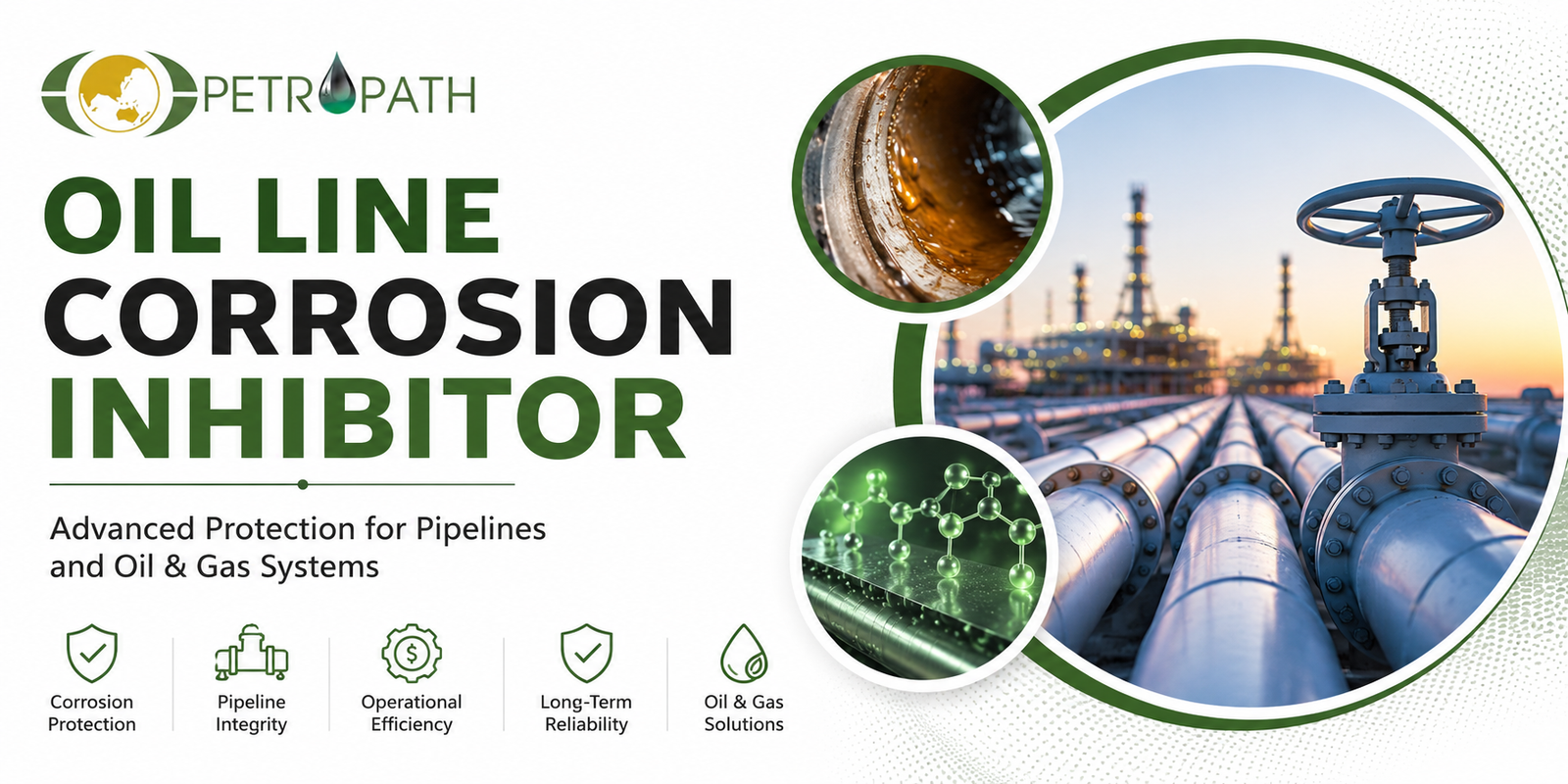
An Oil Line Corrosion Inhibitor is a specially engineered chemical treatment designed to prevent internal corrosion inside pipelines, production tubing, flowlines, gathering systems, and related oilfield equipment.
Instead of allowing corrosive fluids to directly attack steel surfaces, the inhibitor adsorbs onto the metal and forms a microscopic protective film. This barrier separates the metal from aggressive compounds that initiate corrosion.
Common corrosion sources include:
- Carbon dioxide (CO₂)
- Hydrogen sulfide (H₂S)
- Dissolved oxygen
- Chloride-rich formation water
- High salinity brine
- Acidic production fluids
- Multiphase oil, gas, and water flow
Using a properly selected Oil Line Corrosion Inhibitor dramatically reduces corrosion rates while improving the overall reliability of production systems.
Why Pipeline Corrosion Demands Immediate Attention
Corrosion rarely begins as a major issue. Small localized attacks gradually weaken pipeline walls until leaks, ruptures, or equipment failures occur.
Without an effective corrosion management program, operators may experience:
- Pipeline leaks
- Production downtime
- Increased repair costs
- Equipment replacement
- Product contamination
- Environmental damage
- Safety hazards
- Regulatory compliance challenges
A professionally designed Oil Line Corrosion Inhibitor program helps prevent these problems before they become expensive failures.
How Oil Line Corrosion Inhibitor Works
The effectiveness of an Oil Line Corrosion Inhibitor comes from its advanced film-forming chemistry.
Surface Adsorption
Active molecules chemically attach themselves to exposed steel surfaces.
Protective Film Development
The molecules organize into an ultra-thin protective coating across the pipeline interior.
Isolation from Corrosive Media
The protective barrier prevents CO₂, H₂S, oxygen, salts, and water from directly contacting the metal.
Electrochemical Protection
Since corrosion requires electrochemical reactions, blocking these reactions dramatically slows metal degradation.
Continuous treatment ensures the protective film remains intact even under demanding production conditions.
Major Benefits of Oil Line Corrosion Inhibitor
Modern Oil Line Corrosion Inhibitor solutions deliver measurable operational improvements across oilfield facilities.
Superior Corrosion Protection
Protects internal pipeline surfaces against aggressive corrosive environments.
Extended Equipment Life
Reduces metal loss and increases the lifespan of valuable infrastructure.
Lower Maintenance Costs
Minimizes emergency repairs, replacement expenses, and maintenance shutdowns.
Improved Operational Reliability
Maintains uninterrupted production while reducing unexpected failures.
Excellent High-Temperature Performance
Performs effectively under elevated operating temperatures and pressures.
Compatibility with Multiple Systems
Suitable for sweet crude, sour crude, gas production, condensate systems, and multiphase pipelines.
Reduced Downtime
Continuous protection helps maintain steady production and operational efficiency.
Cost-Effective Asset Protection
Lower corrosion rates translate directly into improved return on infrastructure investments.
Applications Across the Oil and Gas Industry
A high-performance Oil Line Corrosion Inhibitor is suitable for numerous production and transportation applications.
Oil Production Systems
- Production tubing
- Wellhead equipment
- Flowlines
- Downhole completion systems
Pipeline Networks
- Crude oil pipelines
- Gathering systems
- Export pipelines
- Multiphase transportation lines
Gas Production Facilities
- Gas gathering pipelines
- Condensate systems
- Gas processing units
- Transmission pipelines
Water Injection Operations
- Produced water lines
- Injection wells
- Disposal systems
- Water handling equipment
Refineries and Processing Plants
- Process pipelines
- Heat exchangers
- Distillation units
- Storage facilities
Factors That Accelerate Pipeline Corrosion
Several operational conditions influence corrosion severity.
These include:
- High CO₂ concentration
- Presence of H₂S
- Elevated water content
- Oxygen contamination
- High chloride levels
- Increased operating temperature
- High fluid velocity
- Acidic production fluids
- Microbial activity
- Flow turbulence
Proper chemical selection ensures the Oil Line Corrosion Inhibitor performs effectively under these varying conditions.
Recommended Dosage and Application
Typical treatment concentrations range between:
20–200 ppm
The optimal dosage depends on:
- Water cut
- CO₂ concentration
- H₂S concentration
- Operating temperature
- Pipeline pressure
- Flow velocity
- Corrosion monitoring results
- Fluid chemistry
Common Injection Methods
- Continuous chemical injection
- Batch treatment
- Wellhead injection
- Downhole capillary injection
- Pipeline pigging support
- Chemical dosing skids
Routine monitoring and corrosion coupon analysis help optimize treatment performance.
Do Corrosion Inhibitors Replace Pigging and Inspections?
A common misconception is that corrosion inhibitors eliminate the need for maintenance activities.
The answer is no.
An Oil Line Corrosion Inhibitor significantly reduces corrosion rates but works best as part of a comprehensive integrity management program that includes:
- Pipeline pigging
- Intelligent pipeline inspection
- Corrosion monitoring
- Fluid analysis
- Thickness measurements
- Chemical performance evaluation
Combining these practices delivers maximum pipeline reliability and long-term asset protection.
Best Practices for Storage and Handling
To preserve product effectiveness:
- Store in a cool, dry, well-ventilated location.
- Keep containers tightly sealed.
- Protect from direct sunlight and excessive heat.
- Wear appropriate personal protective equipment during handling.
- Follow applicable safety and chemical handling guidelines.
Under recommended storage conditions, the product typically offers a shelf life of up to 24 months.
Why Modern Oilfield Operations Depend on Oil Line Corrosion Inhibitor
Corrosion is an unavoidable challenge, but its impact can be effectively controlled with the right chemical treatment strategy. A high-quality Oil Line Corrosion Inhibitor protects pipelines, production equipment, and processing systems from aggressive internal corrosion while improving operational efficiency and reducing maintenance costs.
As oil and gas infrastructure continues to operate under increasingly demanding conditions, investing in advanced corrosion protection is essential for maintaining long-term asset integrity, production reliability, and environmental safety. Selecting the right inhibitor solution today helps safeguard critical infrastructure for years to come.
Frequently Asked Questions
Active molecules in the inhibitor chemically adhere (adsorb) to the metal’s internal surface, forming a barrier that repels water and prevents corrosive gases from reacting with the steel.
Common types include film-forming amines , imidazolines , and quaternary ammonium compounds . They can be oil-soluble, water-soluble, or mixed, depending on the fluid conditions.
They are typically introduced either via continuous injection (e.g., at wellheads) or through periodic batch treatments to maintain system integrity.
No. Inhibitors are preventive tools; they must be paired with detective tools like inline inspection, pigging, and regular corrosion monitoring.
Petropath Global
Email: sales@ppdrillingfluids.in
Phone: +91 98867 88642
Website: www.petropathglobal.com
We provide worldwide delivery, customized chemical solutions, technical consultation, and responsive support tailored to your operational requirements.